
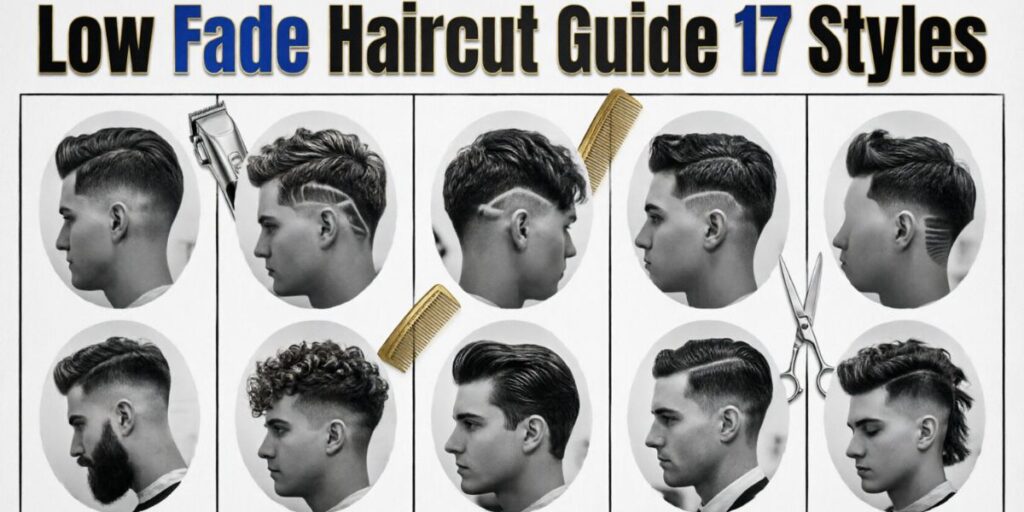
If you’ve been circling the barbershop chair, unsure what to ask for — the low fade haircut is almost certainly what you’re picturing. It’s the one style that manages to look equally polished in a Monday morning meeting and on a casual Friday night. Sharp but not aggressive. Modern but not trendy in a way that dates fast.
This guide breaks down everything: what a low fade actually is, how it compares to other fades, the 17 best versions of the style in 2026, which cut suits your face shape, and exactly what to tell your barber. Whether you’re new to fades or looking for your next upgrade, this is your go-to reference.
What Is a Low Fade Haircut?
A low fade haircut is a barbering technique where hair gradually transitions from its full length on top down to a very short — sometimes skin-level — length along the lower sides and back. The word “low” tells you exactly where the action happens: the fade begins just above the ears and the neckline, occupying roughly the bottom one inch of the sides.
That placement is what separates it from other fades and makes it feel so wearable. The sides aren’t dramatically shaved down. You keep enough hair visible on the sides that the overall look stays natural and conservative, while still achieving that crisp, blended finish that makes a fade a fade.
Defining Features of a Low Fade
- Starting Point: The blend begins roughly one inch above the ear, staying close to the hairline
- Blend: Hair tapers gradually downward, using progressively smaller clipper guards until it reaches the skin or a very short length near the neckline
- Contrast: A clear but subtle gradient exists between the longer top and the shorter sides
- Professional Look: Because it doesn’t remove much hair from the mid or upper sides, it reads as conservative and workplace-appropriate
- Customization: Works with virtually any top style — from a textured crop to a pompadour to natural curls
Taper vs. Fade: What’s the Difference?
These two terms get mixed up constantly, even in barbershops. Here’s the clean distinction:
| Feature | Taper | Fade |
| Transition | Gradual, over a wider area | More dramatic, concentrated lower |
| Final length | Stops at a short clipper length | Can go all the way to skin |
| Overall effect | Softer, more natural | Sharper, higher contrast |
| Upkeep needed | Every 4–5 weeks | Every 2–3 weeks |
| Best for | Professional and conservative looks | Trendy and defined styles |
A taper fade combines elements of both — it uses a low placement like a taper but blends more aggressively like a fade. Many barbers use the terms interchangeably, so specifying “low skin fade” or “low taper” when you sit in the chair will get you exactly what you want.
Low Fade vs. Mid Fade vs. High Fade
Understanding where a fade sits on your head is the most important piece of information to communicate to your barber.
| Fade Type | Where It Starts | Look & Feel | Best For |
| Low Fade | Just above the ear | Subtle, conservative, natural | Offices, formal settings, all face shapes |
| Mid Fade | Around the temples | Balanced, versatile | Most men; works across styles |
| High Fade | Above the temples | Bold, dramatic, high contrast | Statement looks, strong facial features |
The rule of thumb: low fades are subtle, mid fades are balanced, and high fades are bold. If you’re unsure where to start, a low fade is the most forgiving choice — it grows out gracefully and rarely looks awkward in between barber visits.
Best Low Fade Haircuts for Men in 2026
1. Classic Low Fade
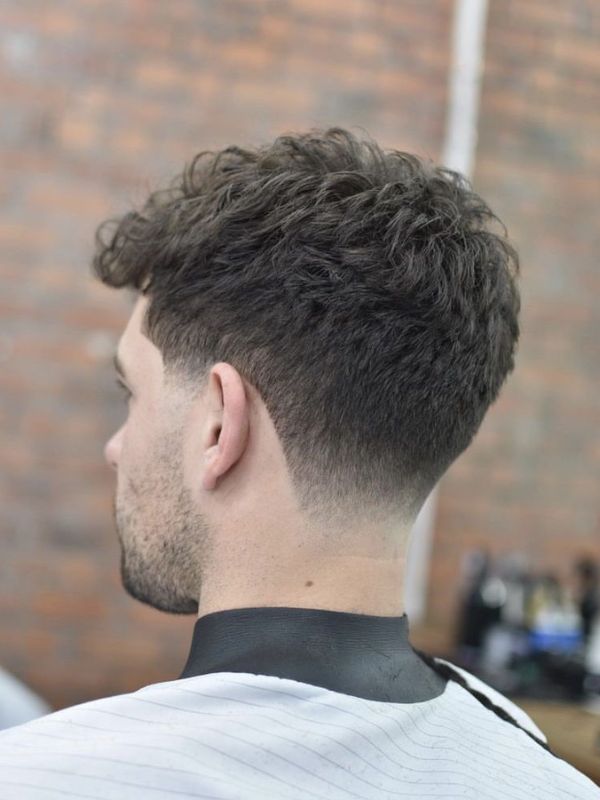
The foundational version of the cut. Hair on top is kept at a medium length — usually 2 to 3 inches — while the sides taper cleanly from a #2 or #3 guard down to the skin near the hairline. No frills, just a clean, confident shape that never goes out of style. This is the cut David Beckham’s team always returns to as a base style.
Best for: Any hair type, any face shape, professional environments
2. Low Fade with Curly Hair
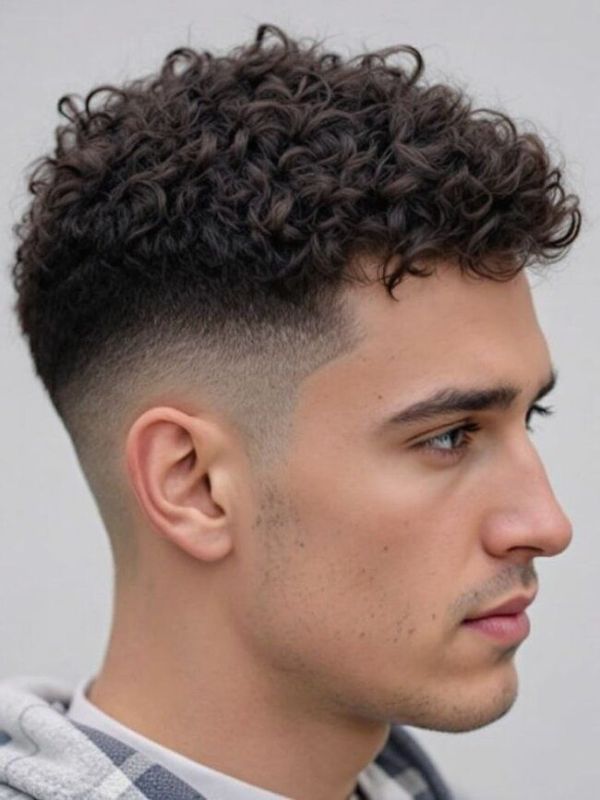
Curly hair and low fades were made for each other. The fade keeps the sides controlled while allowing the natural texture and volume on top to do the talking. A #1.5 or shadow fade at the bottom creates just enough contrast to frame the curl pattern without over-thinning the sides. Avoid aggressive tapering here — curly hair needs that side weight to look full, not sparse.
Styling tip: Use a curl-defining cream or light mousse on damp hair, then diffuse dry for definition.
3. Low Fade with Straight Hair
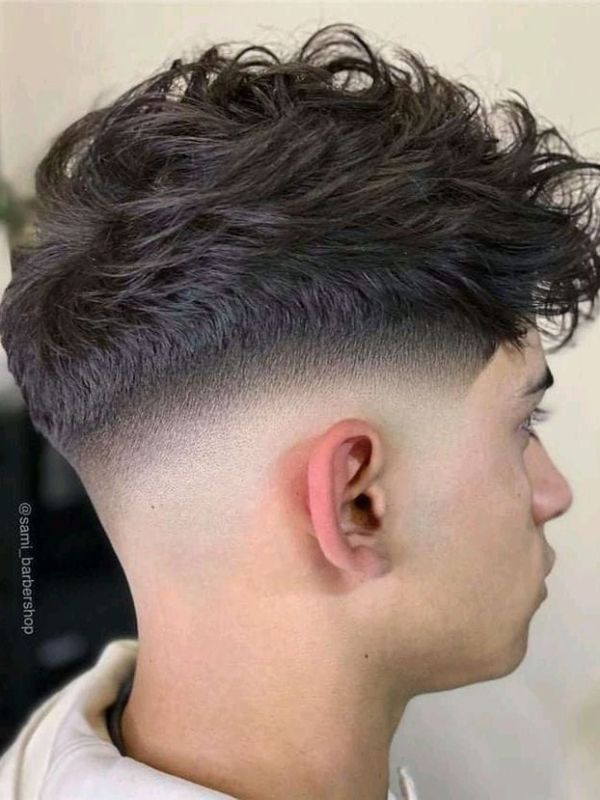
Straight hair holds structure exceptionally well, which makes it ideal for clean, precise fades. The transition from a longer top to the faded sides looks graphic and sharp. Side parts, comb overs, and slick backs all work particularly well with straight hair paired with a low fade.
Styling tip: A medium-hold pomade or styling cream gives straight hair that polished, finished look without weighing it down.
4. Low Fade with Wavy Hair
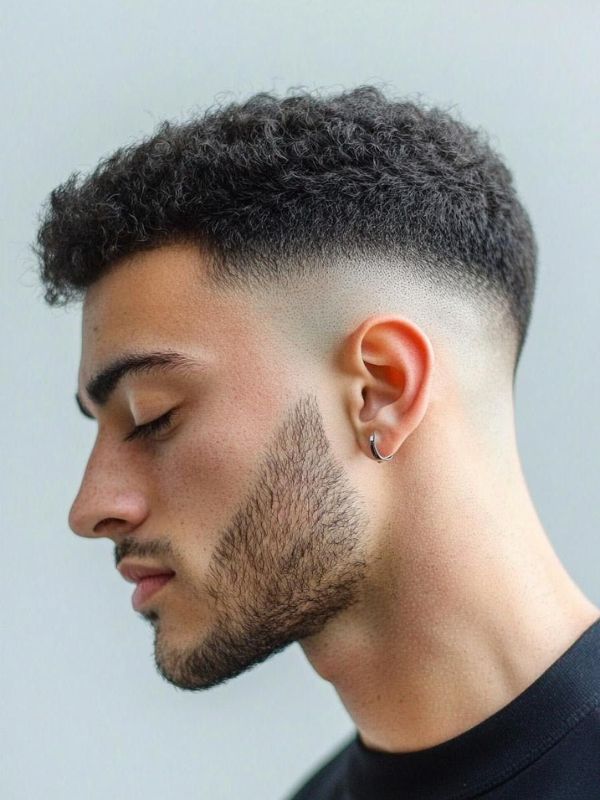
Wavy hair sits between straight and curly — and that’s exactly what makes it so adaptable with a low fade. Waves add natural volume and movement on top, which gives even a simple low fade a lot of visual depth. Messy textured styles work especially well here. Let the waves do the heavy lifting and keep the fade clean and tight.
Styling tip: Sea salt spray or a light texturizing paste adds definition without flattening the wave.
5. Low Taper Fade
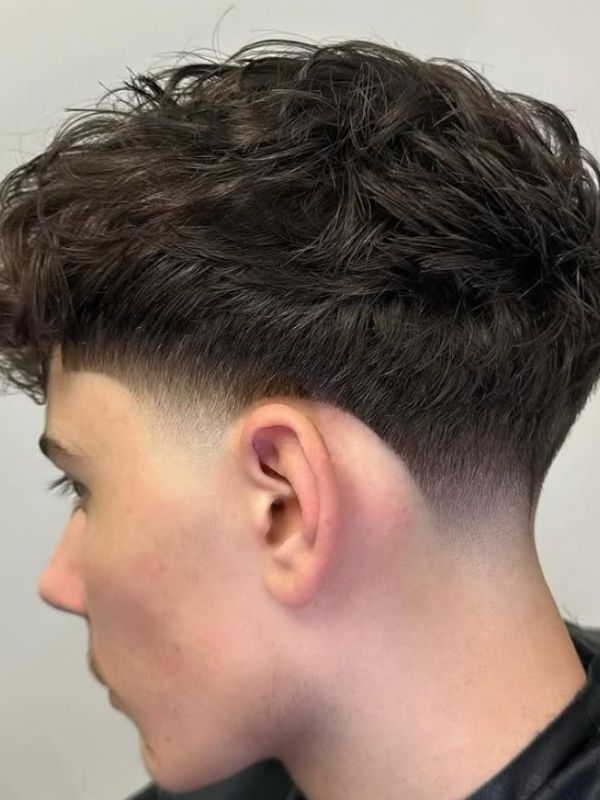
This is the more conservative cousin of the classic low fade. The blend is more gradual, stretching over a wider zone on the sides and typically ending at a longer length than a traditional fade. The result is a softer, more understated transition — close to what you’d see on a traditional gentleman’s cut. This is the go-to for men who want a fade but work in strict professional environments.
Best for: Square and round face shapes; conservative workplaces
6. Low Skin Fade
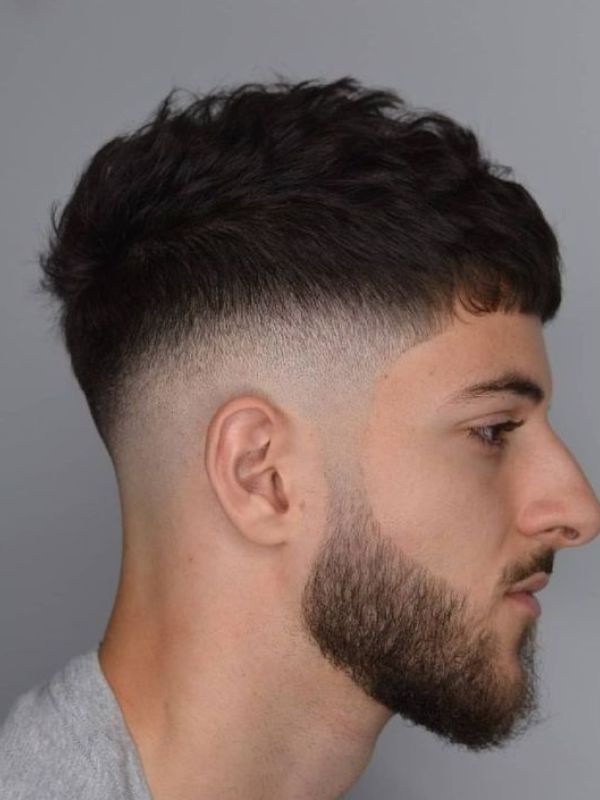
Also called a bald fade, this takes the low fade concept all the way to bare skin at the baseline. The contrast between the longer top and the skin-level sides is sharp and striking. It’s more high-maintenance than a standard low fade but delivers the cleanest, most defined finish possible.
Maintenance note: A skin fade needs a touch-up every 1–2 weeks to stay sharp.
7. Low Drop Fade
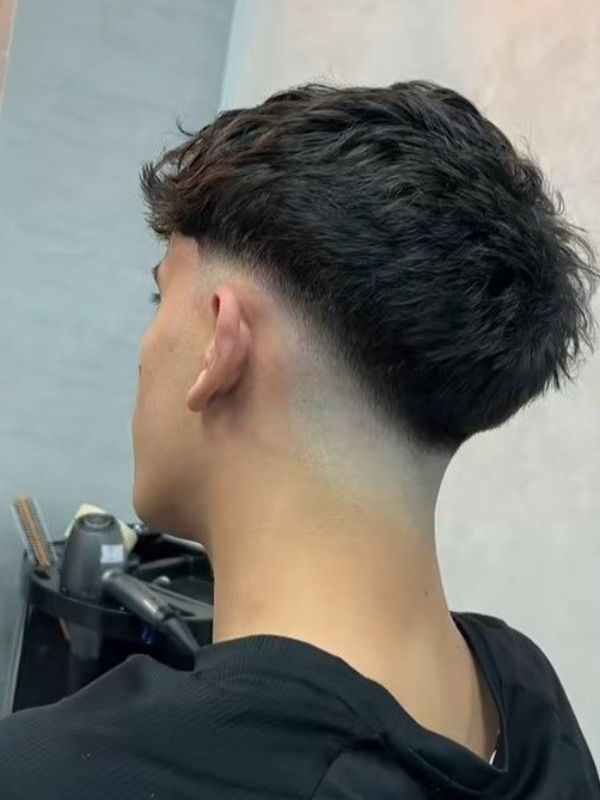
The drop fade adds a design twist: instead of a straight horizontal fade line, the line drops down behind the ear, following the natural curve of the head. This creates a distinctive C-shaped arc that adds visual interest to an otherwise clean cut. It works especially well with textured or curly hair on top.
Best for: Oval and heart-shaped faces; men who want something slightly bolder without going high
8. Buzz Cut with Low Fade
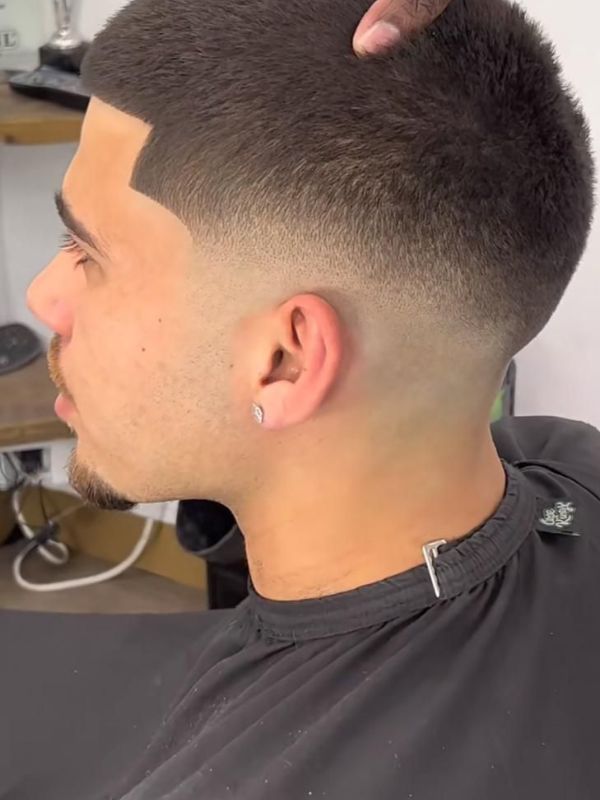
Take the entire head short, buzz the top to a #2 or #3 guard, and let the low fade handle the transition on the sides. The result is crisp, minimal, and almost zero-maintenance on top. This works beautifully for men with strong jawlines or prominent cheekbones — the fade frames the face without any distraction from length on top.
Best for: Men with defined facial features; summer months; very low-maintenance lifestyle
9. Pompadour with Low Fade
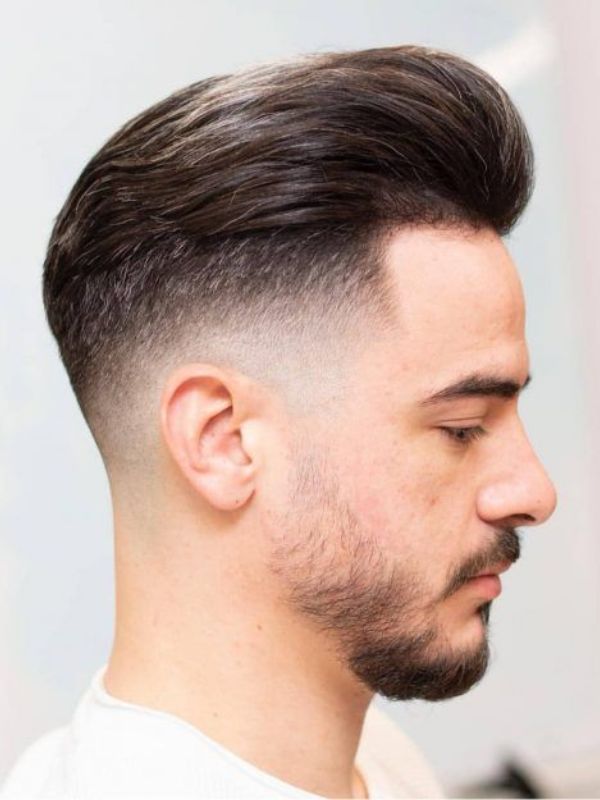
The pompadour with a low fade is one of the most requested classic-meets-modern combinations. Volume and height at the front sweeping backward, with clean, faded sides that bring all the attention upward. A low fade keeps this look from feeling costumey — it grounds the height with something contemporary and clean.
Styling tip: Use a blow dryer with a round brush to build lift at the roots, then finish with a medium-hold pomade.
10. Fringe with Low Fade
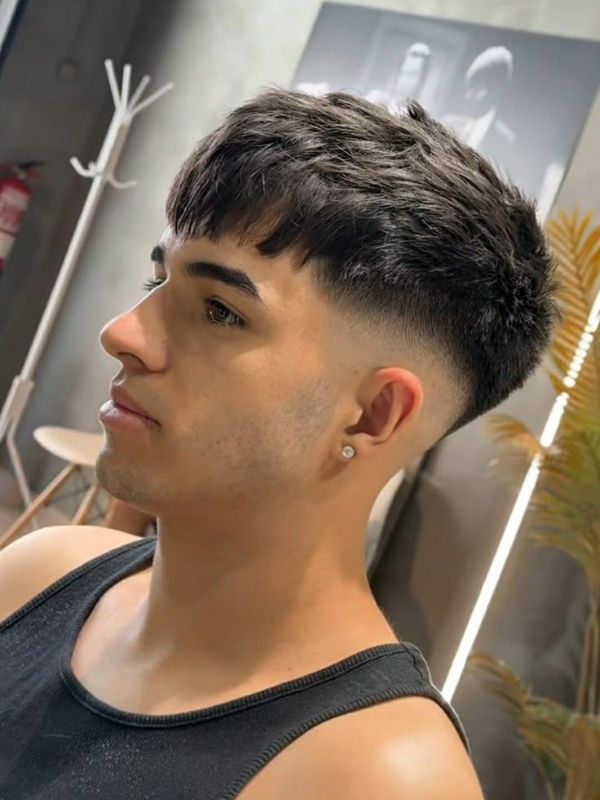
A fringe (or side-swept bangs) paired with a low fade creates a stylish contrast between the soft, falling front and the tight, structured sides. This is particularly popular among younger men and those with Asian hair textures. The low fade keeps the sides from looking heavy while the fringe softens the overall look.
Best for: Oval and oblong face shapes; straight and wavy hair types
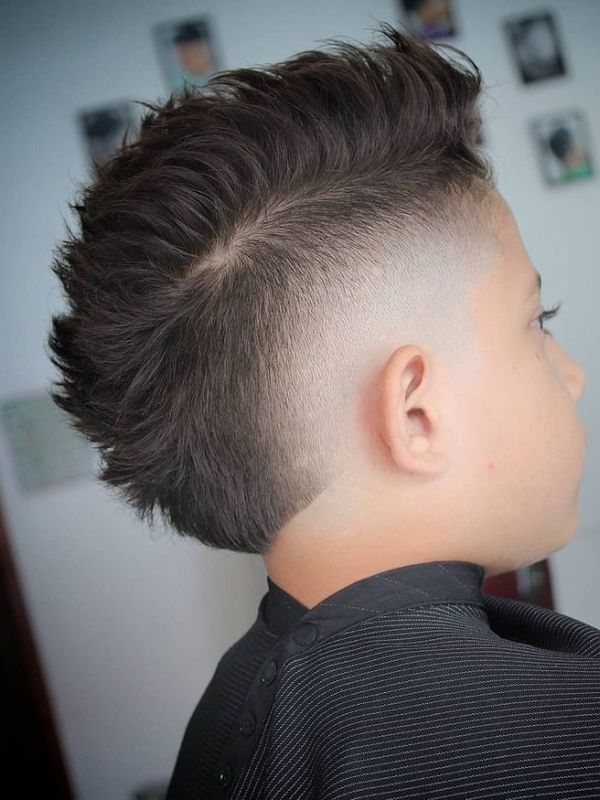
11. Faux Hawk with Low Fade
Read This: Fade Haircuts for Black Men: 73 Sharp Styles & Tips
The faux hawk keeps hair running in a strip down the center of the head while the sides are faded down. A low fade version of this is subtler than the classic faux hawk — less punk, more polished. It’s an easy way to add edge to a professional-looking haircut without going too far.
Styling tip: Apply a matte clay or styling paste and use your fingers to push hair toward the center.
12. Undercut with Low Fade
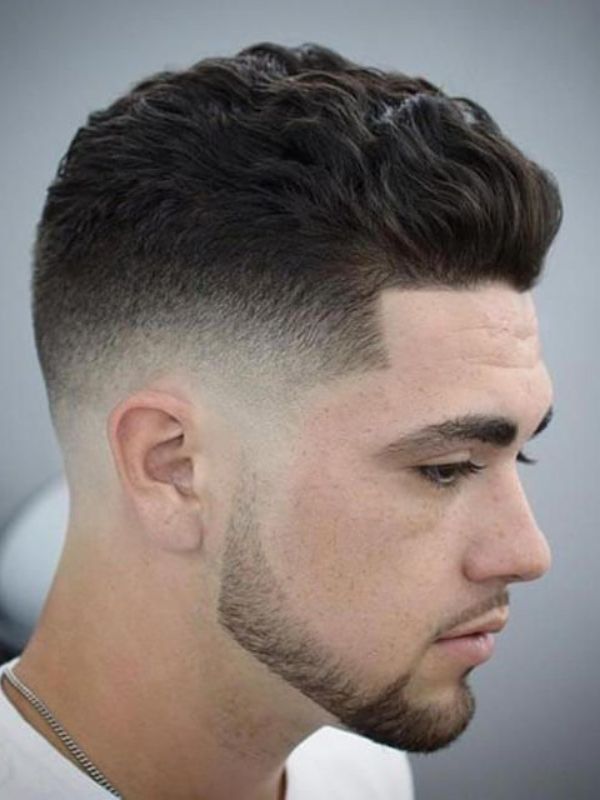
The undercut traditionally creates a sharp disconnect between the top and sides. Pairing it with a low fade softens that hard line, blending the disconnect into a smoother transition. The result has the visual drama of an undercut with the wearability of a fade.
Best for: Men with thick hair; square and oval face shapes
13. Comb Over with Low Fade
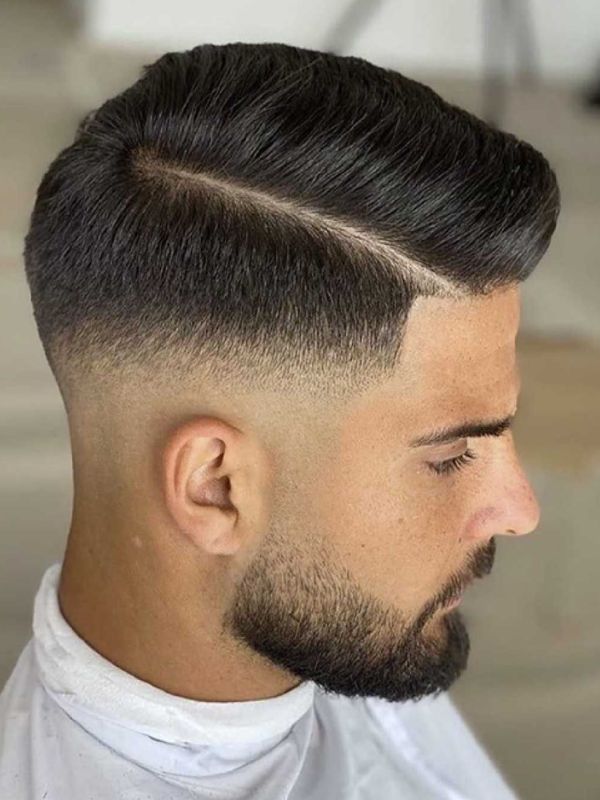
One of the most timeless and consistently popular combinations on this list. Hair on top is longer and combed to one side, creating a soft natural part, while the low fade keeps the sides immaculate. This is what most people picture when they say “clean and professional.”
Styling tip: A light-hold, high-shine pomade or a water-based styling cream works best for maintaining the comb over throughout the day.
14. Spiky Hair with Low Fade
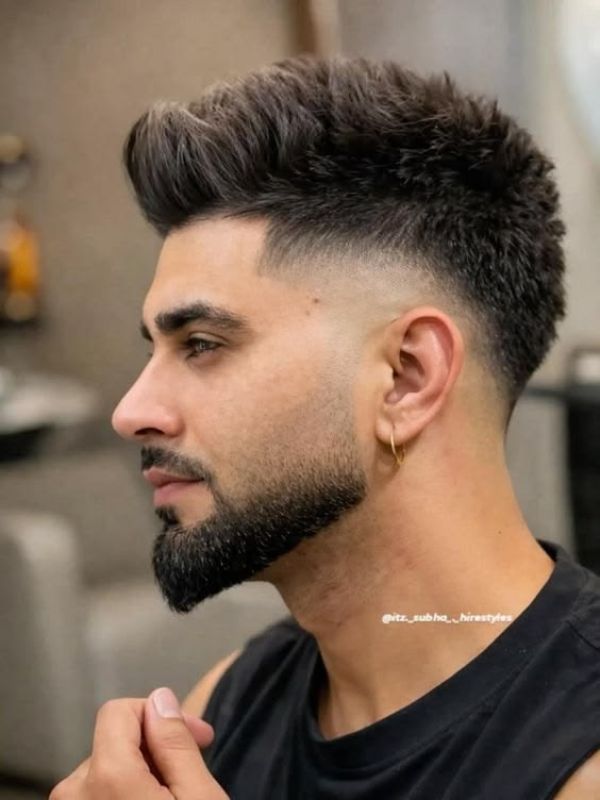
Short spikes on top with a low fade underneath is a look that reads modern without trying too hard. The spikes don’t need to be dramatic — even a subtle upward texture on top looks deliberate and sharp next to a clean faded side.
Styling tip: A matte clay or medium-hold gel applied to damp hair and spiked upward with fingertips gives a natural, lived-in version of this style.
15. Afro Low Fade
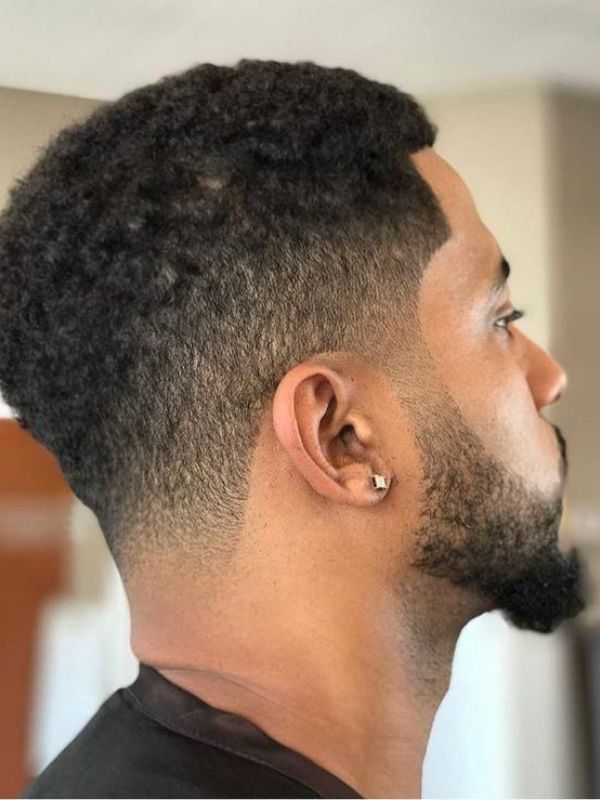
For natural hair with significant volume and texture, the afro low fade is one of the most flattering cuts available. The fade at the base keeps the shape rounded and defined, while the natural curl pattern on top gets to breathe and expand. The fade enhances the geometric shape of the afro without reducing its volume.
Maintenance tip: Regular moisturizing and shaping every 2–3 weeks keeps this cut looking intentional rather than overgrown.
16. Low Fade with Beard
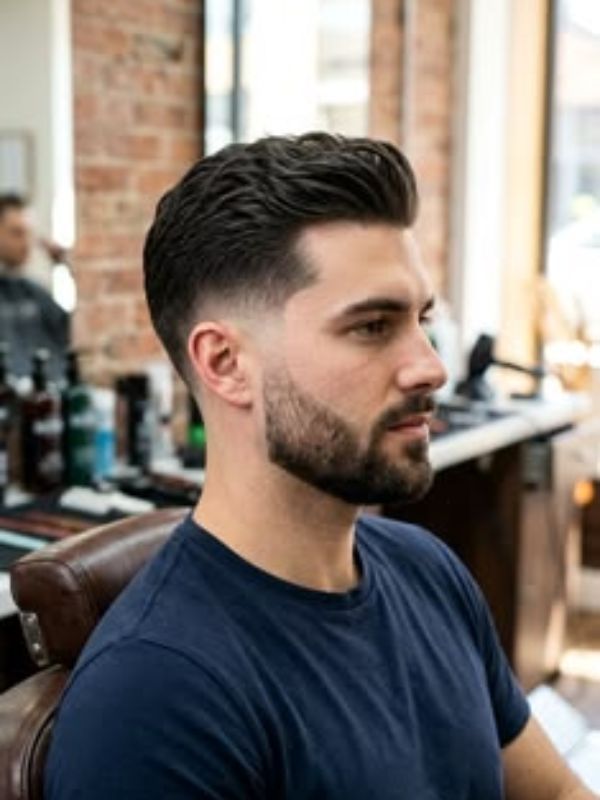
Few combinations are as universally flattering as a low fade that connects seamlessly into a beard. When a skilled barber blends the fade into the beard line, the two elements merge into a cohesive shape that frames the face brilliantly. This is the style Drake is most associated with — a tight, well-shaped beard meeting a precisely faded hairline.
Barber’s note: Tell your barber whether you want a hard line between the fade and beard or a gradual blend — both look great, but they achieve different effects.
17. Low Fade with Design (Hard Part/Lines)
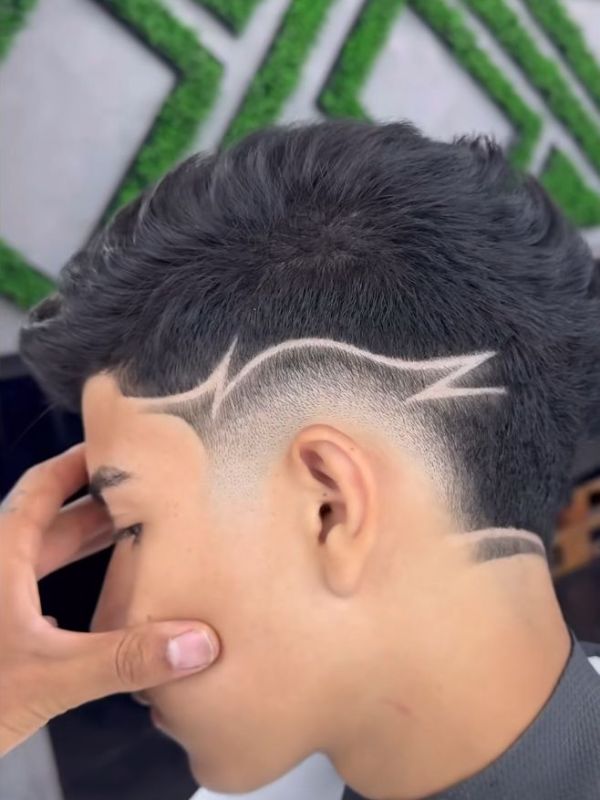
Adding a razor-etched hard part, shaved lines, or geometric designs into a low fade elevates it into personal statement territory. A hard part carved along the natural part line is the most subtle option and adds instant definition without looking overdone. More intricate designs — curved lines, angles, or patterns near the temple — are for men who want their hair to do the talking.
Best for: Men with strong personal style; those who want maximum impact from a shorter cut
Celebrities Rocking the Low Fade
Real-world examples make it easier to visualize a cut. These four celebrities are consistently associated with well-executed low fades:
1. Zayn Malik
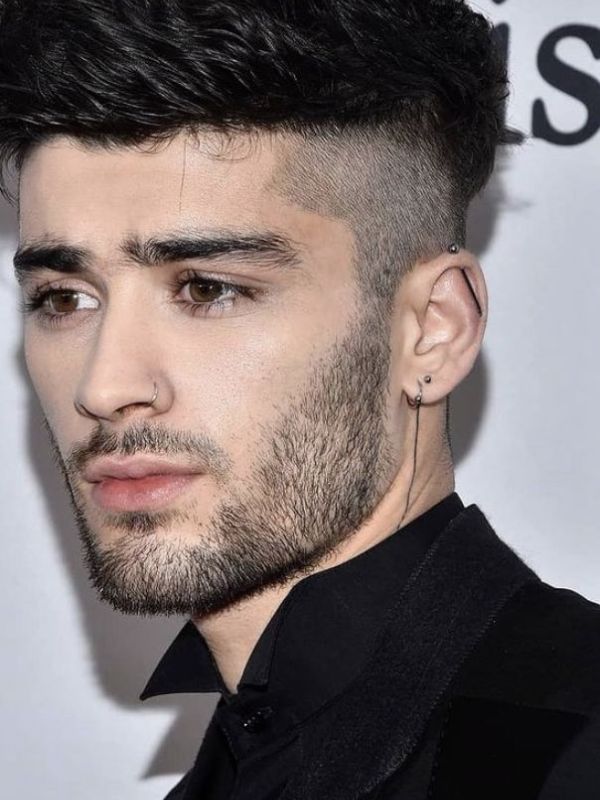
Zayn is one of the most consistent low fade advocates in the celebrity world. He frequently pairs a low skin fade with textured, messy tops or precise quiffs, giving the look a slightly edgy quality while keeping it clean. His style proves that a low fade works equally well with a tailored suit and with streetwear.
2. Michael B. Jordan
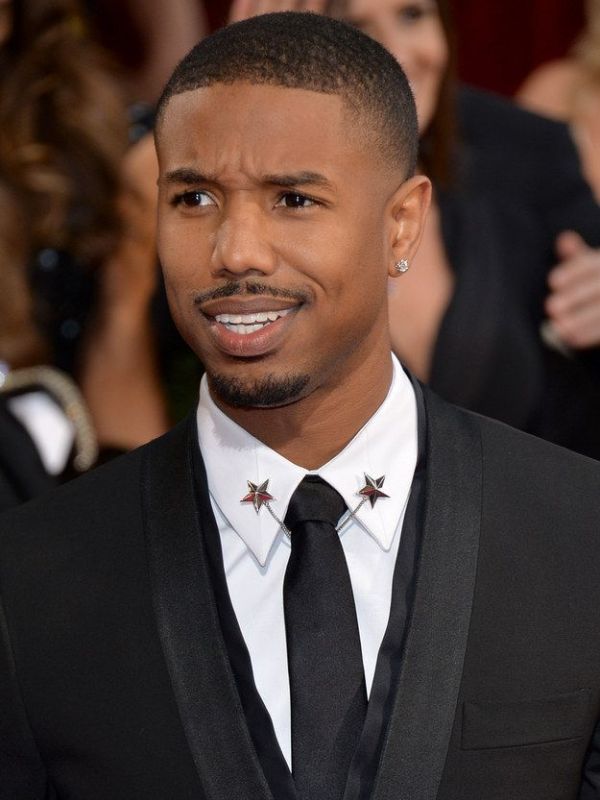
Jordan’s low fade is almost always paired with his natural curls on top. The combination of a tight, clean fade at the bottom and the relaxed curl pattern above creates a balanced look — structured without being stiff. His version shows how the low fade enhances rather than competes with natural hair texture.
3. David Beckham
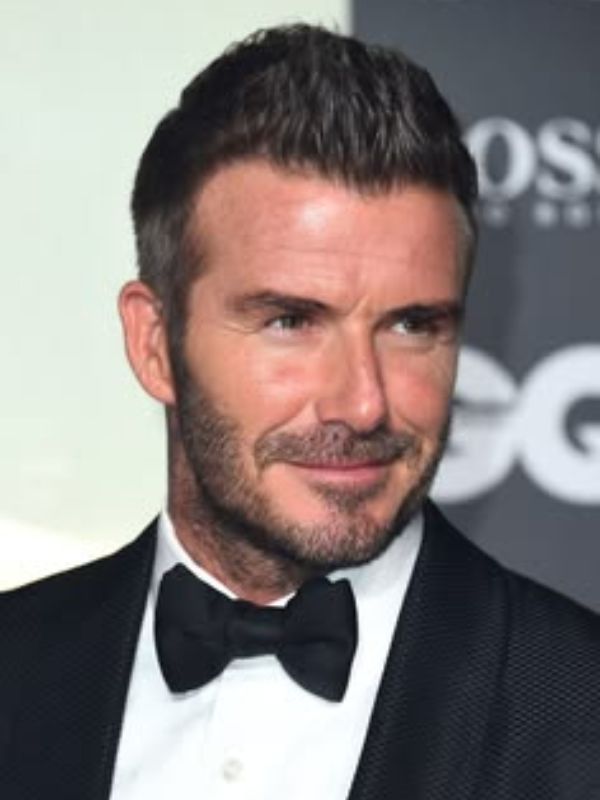
No list of low fade inspiration would be complete without Beckham. Throughout his career he has rotated through comb overs, pompadours, and slick backs — always anchored by a clean low fade or taper. His cuts are the gold standard for the professional, put-together version of this style.
4. Drake
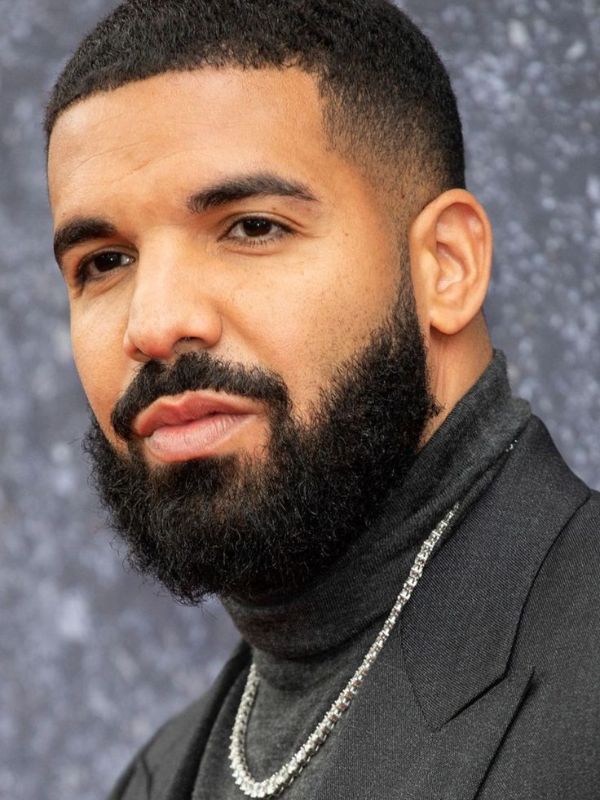
Drake tends to keep his top short and tight, often adding a hard part or subtle design element near the temple. His low fade blends neatly into a well-groomed beard, demonstrating exactly how a fade and beard can work together as one cohesive shape.
Benefits of a Low Fade Haircut
Clean and Modern Look
A low fade gives even the simplest haircut a finished, intentional quality. The gradual blend from top to sides prevents that blocky, unrefined appearance that longer sides can sometimes create. It’s the difference between a haircut that looks professionally done and one that looks like it might have happened at home.
Works with Most Face Shapes and Hair Types
Unlike some styles that flatter only specific features, the low fade is genuinely democratic. It works with straight hair, curly hair, coarse hair, and fine hair. It suits oval, round, square, and oblong faces — though the specific version of the low fade you choose should be selected with your face shape in mind (more on that below).
Easy to Maintain
Because the fade is concentrated at the bottom of the sides, it grows out more gracefully than a mid or high fade. A low fade typically looks clean for 3–4 weeks before needing a fresh tidy-up. That’s a meaningful difference if you’re trying to minimize barber visits.
Choosing the Right Low Fade for Your Face Shape
1. Oval Face
This is the most balanced face shape, and almost every version of the low fade works well. You have the freedom to experiment — try a pompadour, a faux hawk, or a textured crop without much risk. Consider yourself lucky.
2. Round Face
For round faces, adding height on top is the priority. A low fade with a quiff, pompadour, or voluminous top creates the illusion of length and balances out wider cheekbones. Avoid styles that add width on the sides. The drop fade works particularly well here since it draws the eye downward and away from the face’s width.
3. Square Face
Square jawlines are strong by nature, so the goal is usually to soften them slightly rather than amplify them. A low taper fade — with its more gradual blend — does this better than a sharp skin fade. Textured tops without too much height work well. A comb over or side-swept fringe complements strong jawlines without adding unnecessary sharpness.
4. Long/Oblong Face
For longer faces, the goal is to add visual width rather than height. Avoid pompadours or styles with significant volume on top, which elongate the face further. A low fade with a shorter, more textured top and some side volume is the better direction. A buzz cut with a low fade works well here too.
How to Ask Your Barber for a Low Fade?
Walking into a barbershop and just saying “low fade” will get you somewhere, but being more specific will get you exactly what you want.
What to Say
A simple, effective barber script: “I’d like a low fade — can you start the fade just above the ear and blend it down to a skin fade near the neckline? I want to keep the top at [X] inches.”
If you want a low taper fade instead: “Low taper fade, gradual blend from a #2 down to a #0 along the baseline, keep the sides relatively full.”
Reference Haircut Numbers
| Guard Number | Hair Length |
| #0 / Skin | Bare skin |
| #0.5 | ~1.5mm |
| #1 | ~3mm |
| #1.5 | ~4.5mm |
| #2 | ~6mm |
| #3 | ~9mm |
| #4 | ~12mm |
Telling your barber you want a “#2 on top blended down to skin at the base” gives them a precise picture. Combine that with where you want the fade to start and you’re giving them everything they need.
Bring Inspiration Photos
Even experienced barbers appreciate a photo. The more specific you can be with a reference image, the more likely you are to walk out with exactly what you wanted. Screenshots from Instagram, Pinterest, or Google Images all work perfectly.
Maintenance Tips for Low Fade Haircuts
How Often to Get It Trimmed
- Low skin fade: Every 1–2 weeks to stay sharp
- Standard low fade: Every 2–3 weeks for a fresh look
- Low taper fade: Every 3–5 weeks; grows out more gradually
Between barber visits, use a precision trimmer to clean up the neckline and keep stray hairs on the sides from blurring the fade line.
Best Styling Products
| Style Goal | Recommended Product |
| Natural, textured finish | Matte clay or styling paste |
| Slick, polished look | Water-based pomade |
| Curl definition | Curl cream or light mousse |
| Volume and lift | Texturizing powder or volumizing spray |
| All-day hold, shiny finish | Strong-hold pomade |
Always apply product to slightly damp hair for better distribution and a more natural result. Less is more — you can always add, but overdoing it leads to a greasy, heavy appearance.
Daily Grooming Tips
- Wash hair 2–3 times per week with a gentle, sulfate-free shampoo to maintain scalp health without stripping natural oils
- Use a conditioner to keep the longer top section manageable and soft
- Keep a small precision trimmer at home to touch up the neckline and sideburns between appointments
- Moisturize the scalp if you have a skin fade — the exposed skin can dry out, especially in winter months
Conclusion
The low fade haircut has earned its place as one of the most reliably great choices in men’s grooming — not because it’s flashy, but because it works. It grows out gracefully, suits nearly every face shape and hair type, and adapts to whatever style you put on top. Whether you keep it simple with a classic low fade, push it into bold territory with a low skin fade and beard combination, or carve in a hard part for extra definition, you’re working with one of the most versatile haircut foundations in the game.
The 17 styles in this guide are a starting point. Bring your chosen reference photo, give your barber the specific details about where you want the fade to start and how low you want it to go — and you’ll walk out looking sharper than you came in.
