

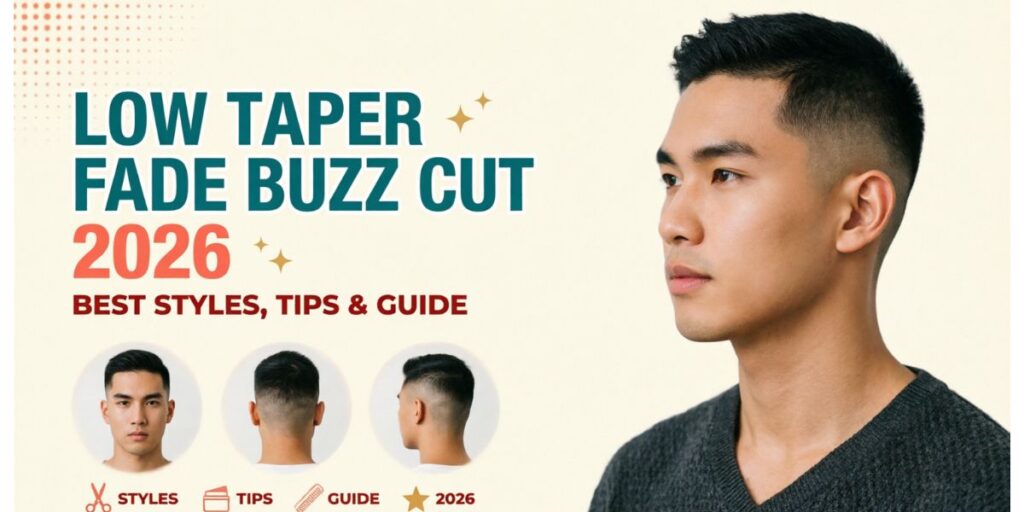
If you want a haircut that looks sharp on Monday and still looks sharp three weeks later, the low taper fade buzz cut is the answer barbers keep giving in 2026. It is short, clean, easy to grow out, and it works on almost every hair type and face shape.
This guide breaks down exactly what the cut is, why it has become the go to style this year, every popular variation you can ask for, and how to keep it looking fresh between visits to the chair.
Whether you are getting your first buzz cut or you are switching from a high fade to something softer, this article gives you the real, practical details barbers actually use, not just pretty pictures.
What Exactly Is a Low Taper Fade Buzz Cut?
A low taper fade buzz cut is a short haircut where the top is buzzed evenly with clippers, usually with a #1, #2, or #3 guard, while the sides and back fade gradually starting low near the ears and neckline. The word “low” simply refers to where the fade begins on the head.
Unlike a high fade, which starts near the temples and shows a lot of skin, a low taper keeps more hair on the sides. The transition from short to shorter happens close to the hairline, which gives a softer, more natural blend instead of a harsh contrast.
Key features of this cut include:
- Even, buzzed top with a consistent guard length
- A gradual fade that begins low around the ears and neckline
- No harsh lines between lengths, just a smooth blend
- Minimal skin showing compared to mid or high fades
- Works with straight, wavy, curly, and thick hair
Because the fade sits low, this cut also grows out more gracefully than higher fades, which is one reason it keeps showing up as the most requested style in barbershops this year.
Why the Low Taper Fade Buzz Cut Is Dominating 2026
Several trends are pushing this haircut to the top of search results and barbershop request lists in 2026.
First, men want low maintenance styles that still look intentional. A low taper buzz cut needs almost no product and holds its shape for weeks, which fits busy schedules for students, office workers, and athletes.
Second, social media and short form video have made barbers show off soft, natural blends instead of extreme skin fades. A low taper looks polished on camera without looking overdone in person.
Third, this cut flatters more face shapes than aggressive high fades or skin fades. Because it keeps more hair volume on the sides, it balances rounder faces and softens sharper jawlines at the same time.
Reasons this haircut continues to grow in popularity:
- Easy to maintain between barber visits
- Looks professional for work, school, or interviews
- Flatters nearly every face shape
- Works well with straight, curly, wavy, or coily textures
- Pairs naturally with beards and clean shaves alike
- Grows out evenly without looking patchy
In short, the low taper fade buzz cut solves the biggest complaint men have about short haircuts: they either grow out badly or need constant touch ups. This one does neither.
All the 2026 Variations You Need to Know
The low taper fade buzz cut is not just one look. It is a family of styles built on the same idea, a short buzzed top with a soft fade near the hairline. Below are the most requested versions this year.
Classic Buzz Cut
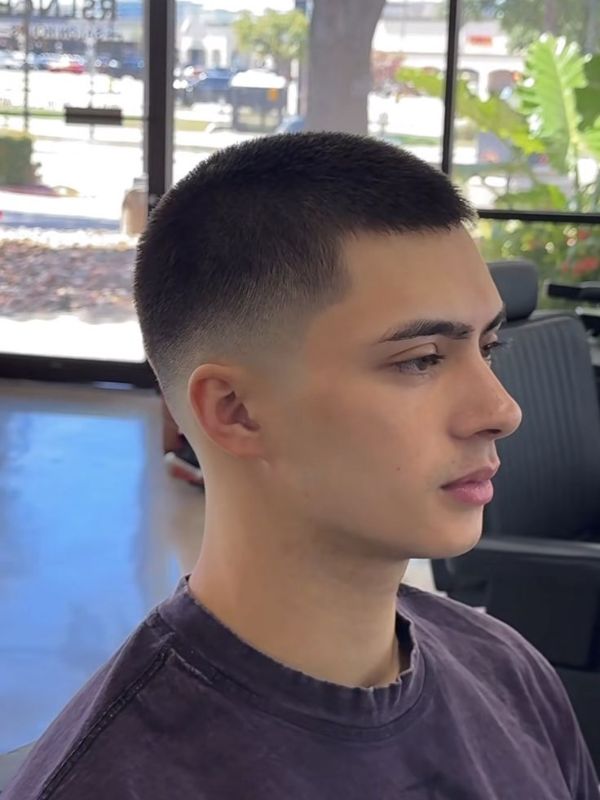
The original. One consistent guard length across the entire head with no fade at all. It is the simplest version and the easiest to maintain, though it lacks the shaping a taper provides.
Textured Buzz Cut
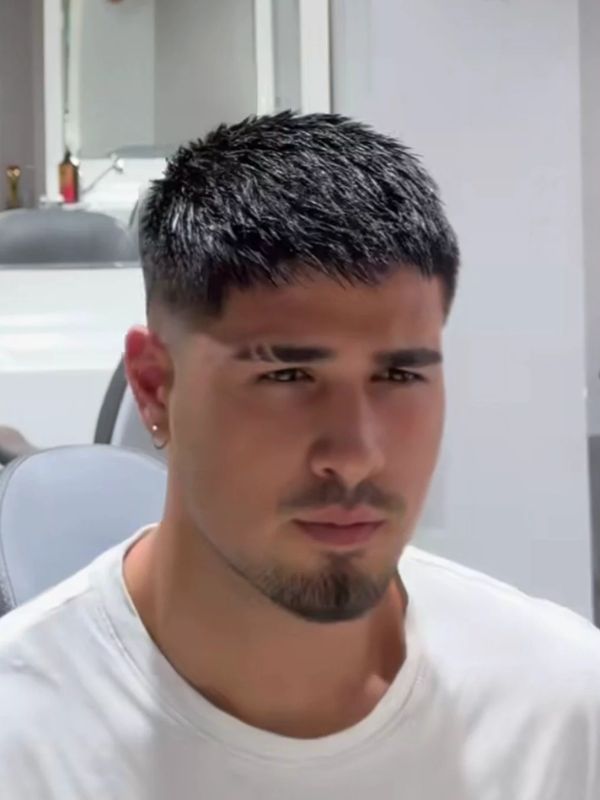
This version uses a slightly longer guard on top, often a #3 or #4, then thinned with texturizing shears. It creates subtle movement and works especially well for men with thick or wavy hair who want a bit more depth on top.
Read This: Master Low Taper Fade Fluffy Hair in 2026: Styles & Tips 2026
Low Taper Fade Buzz Cut
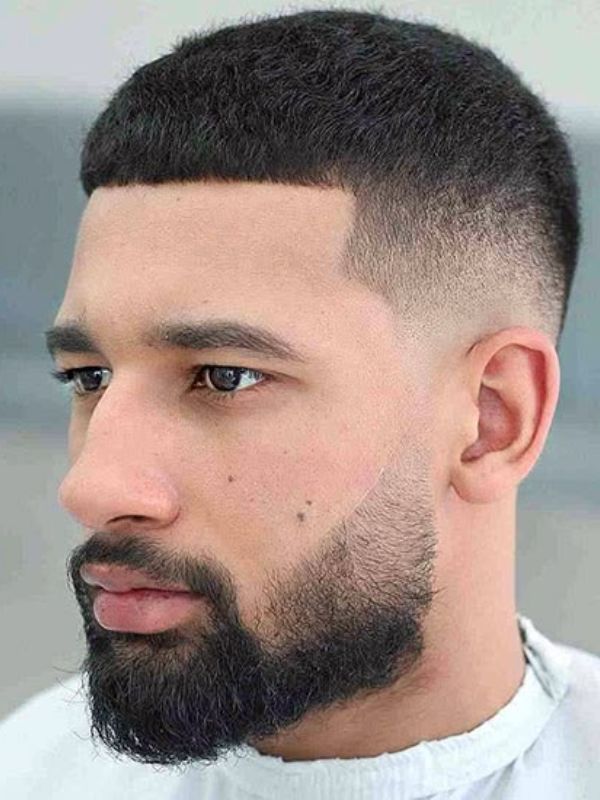
The star of this guide. A short, even top blended into a fade that begins low near the ears and neckline. It stays clean for weeks and suits nearly every hair type and lifestyle.
Skin Fade Buzz Cut
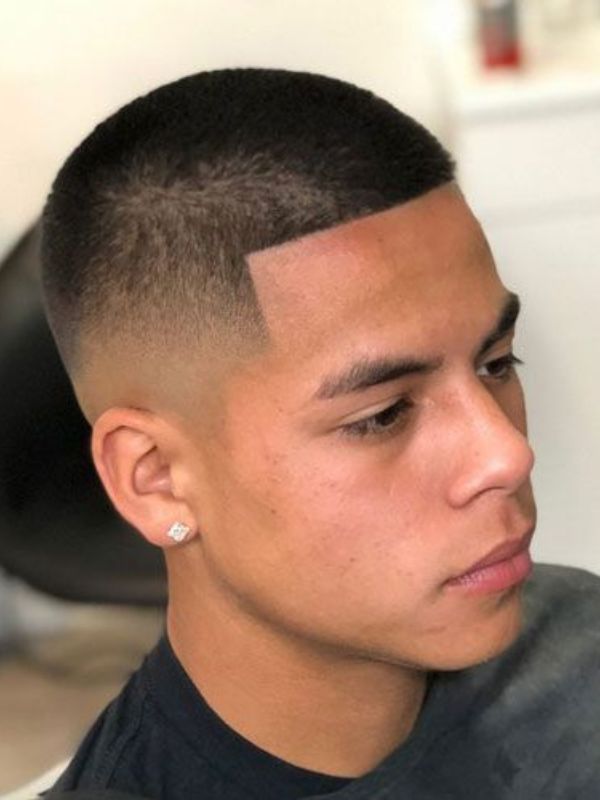
Here the fade drops all the way down to bare skin near the hairline, creating sharp contrast against the buzzed top. It looks bold but requires more frequent trims since regrowth shows faster on bare skin.
High and Tight
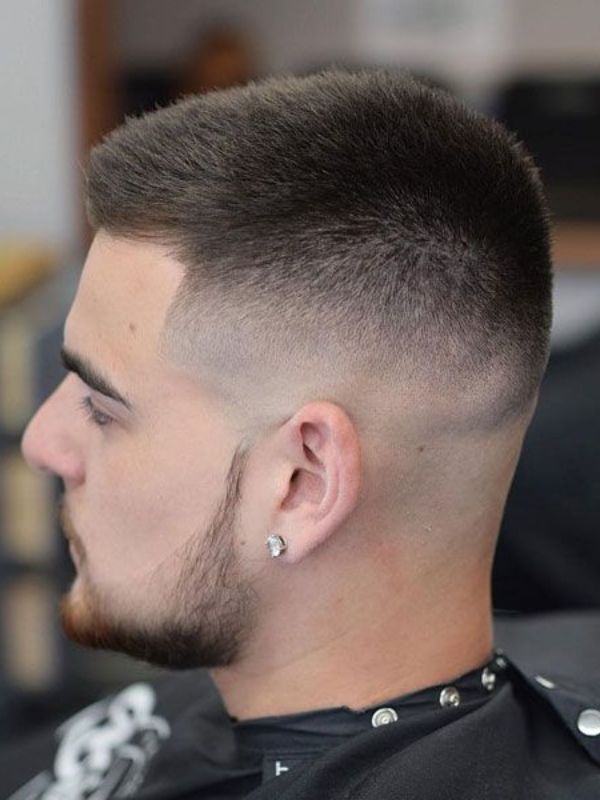
A military inspired cut with very short sides and back, faded high, and slightly longer length left on top. It is one of the lowest maintenance options on this list but offers the least styling flexibility.
Burst Fade Buzz Cut
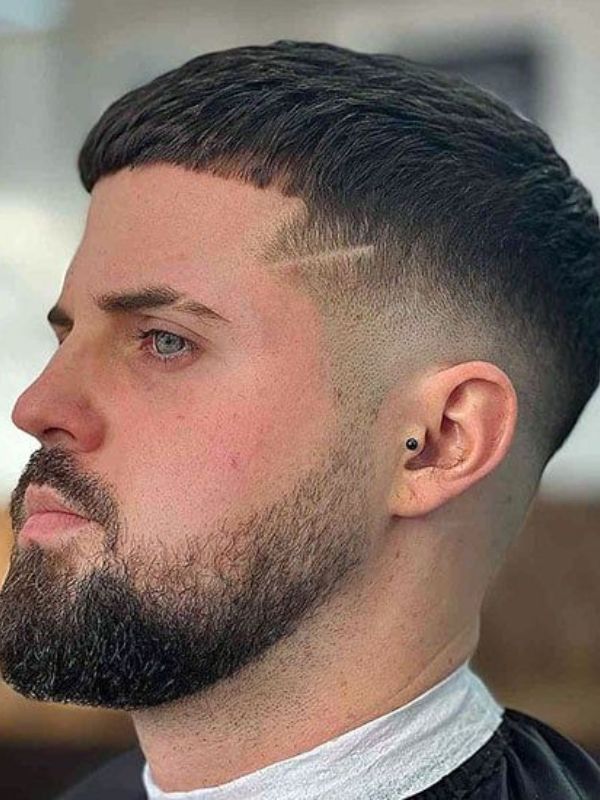
The fade curves around the ear in a semicircle instead of running in a straight line down the neck. It gives a rounder, softer shape and pairs especially well with a low taper for a modern, sculpted finish.
Induction Buzz Cut
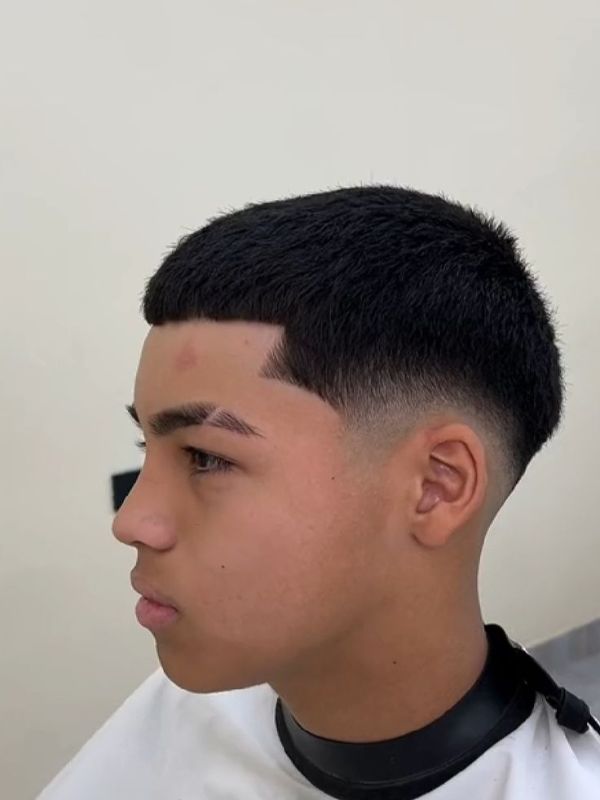
The shortest option available, cut with clippers and no guard at all, leaving hair extremely close to the scalp. It is essentially maintenance free and often chosen by men dealing with thinning hair or those who simply want the lowest effort look possible.
Long Buzz Cut
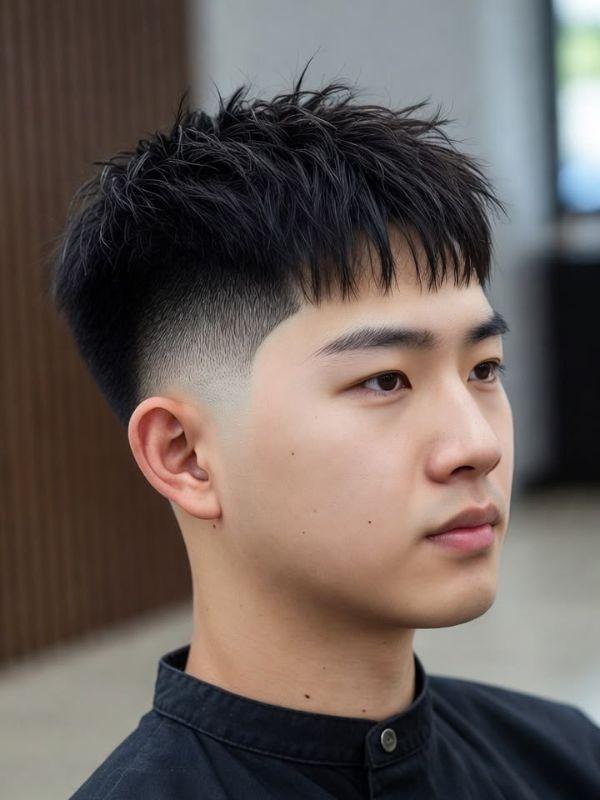
Using a longer guard, typically a #4 or #5, this version keeps more length on top while still qualifying as a buzz cut. It gives a fuller silhouette and can be paired with a low taper for contrast.
Buzz Cut Mohawk Fade
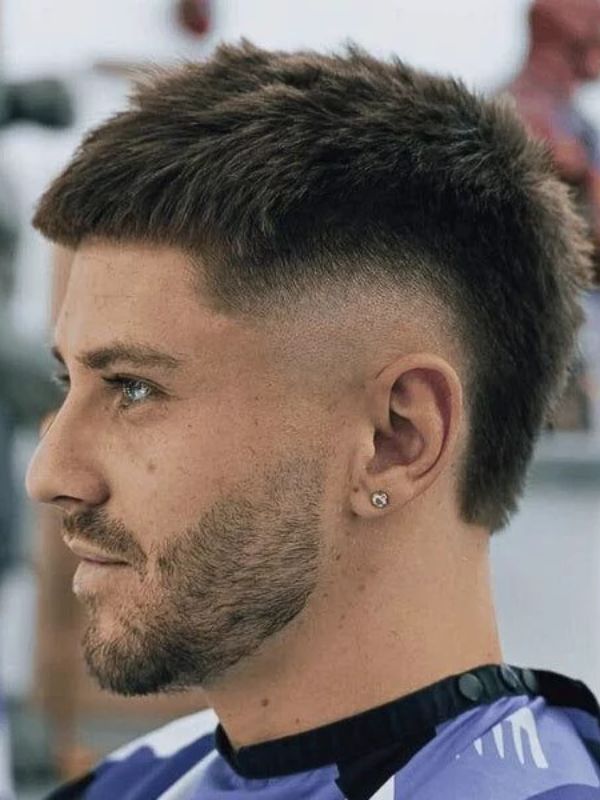
A strip of slightly longer hair runs down the center of the head while both sides are faded low and tight. It is a bolder, more expressive take on the buzz cut family, popular with younger men and athletes.
Low taper fade buzz cut male
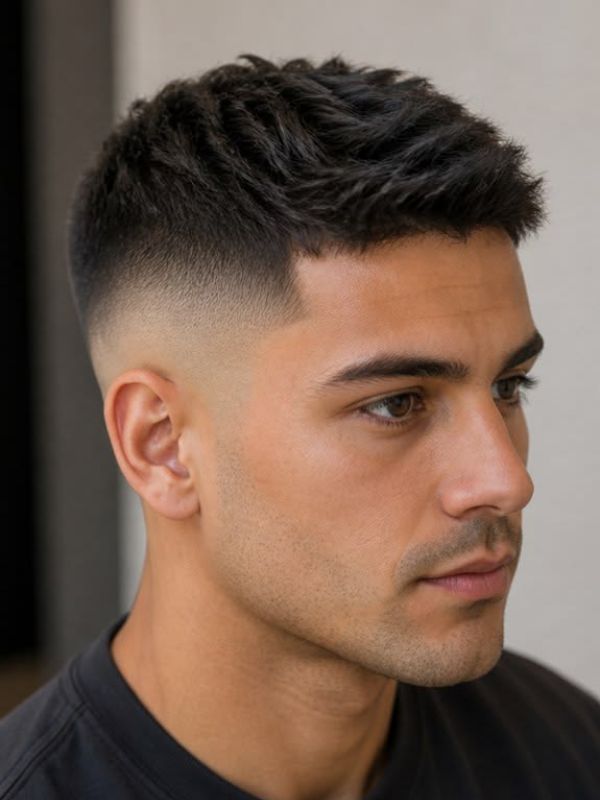
This is simply the standard men’s version of the style described throughout this guide, a short, even top with a soft, low fade around the ears and neckline, suited to nearly any hair type or age group.
Low taper fade buzz cut straight hair
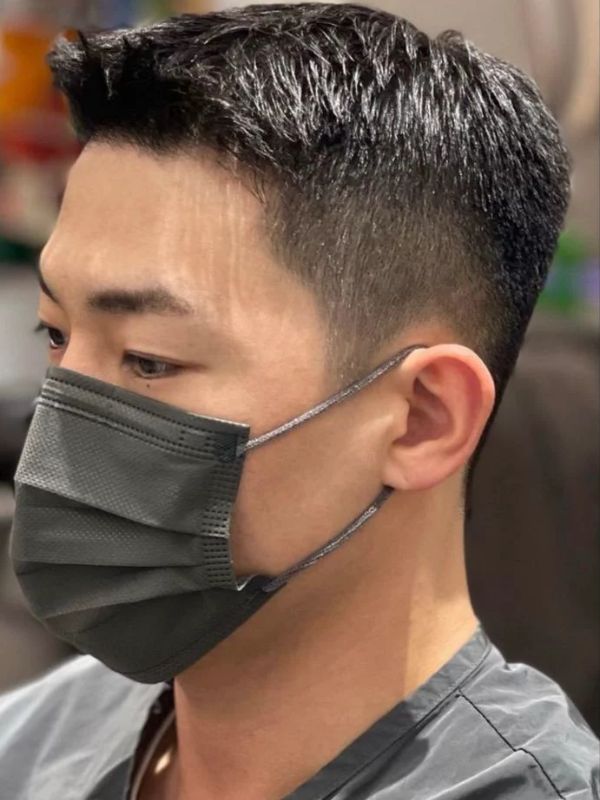
Straight hair takes to this cut especially well because the top lies flat and uniform, making the fade line easier for barbers to blend smoothly. Straight haired men often need the least product of anyone on this list.
Face Shape Cheat Sheet: Will It Suit You?
One of the biggest advantages of a low taper fade buzz cut is how flexible it is across face shapes. Here is a quick reference table to see what tends to work best.
| Face Shape | Recommended Top Length | Why It Works |
| Round | #3 or longer on top | Adds height, avoids widening the face |
| Square | #2 with sharp fade | Complements strong jawline |
| Oval | Almost any length works | Naturally balanced proportions |
| Long | Slightly longer top, low fade | Prevents the face from looking stretched |
| Heart | Fuller top, soft fade | Balances a wider forehead |
| Diamond | Textured top, low burst fade | Softens angular cheekbones |
If you are unsure which category fits you, a good barber can usually tell within seconds and adjust the guard length accordingly.
How to Ask Your Barber (Exact Scripts)
Barbers hear vague requests all day, so being specific gets you a far better result. Use one of these scripts depending on what you want.
- “I want a low taper fade buzz cut, #2 on top, fade starting right above my ears, nothing higher.”
- “Keep the top buzzed short with a #1, and blend it into a low fade around the neckline only.”
- “I want a low taper with a burst fade around my ears, no straight lines, just a rounded blend.”
- “Buzz the top with a #3, low fade in the back, and leave my sideburns natural.”
- “I’d like a skin fade but keep it low, not up by my temples.”
Always mention where you want the fade to start and end. Saying “low” alone can mean different things to different barbers, so pointing to the spot near your ear or the base of your neckline removes any guesswork.
Step by Step: How Barbers Create the Perfect Blend
Understanding the process helps you communicate better and spot a quality cut when you see one.
- The barber starts with a guard, often a #2 or #3, and buzzes the top to an even length.
- A shorter guard, such as a #1, is used to establish the fade line low near the ears and neckline.
- Clippers without a guard or a very short guard are used to gradually blend the shorter section into the longer top, working in upward flicking motions.
- Clipper over comb technique is often used at the crown to smooth any harsh transitions between lengths.
- The hairline and neckline are cleaned up with a trimmer for crisp edges.
- A final check with a mirror confirms the fade looks even from both sides and the back.
This process usually takes fifteen to twenty five minutes for a straightforward low taper fade buzz cut, slightly longer if a line up or beard blend is added.
Maintenance and Grow Out Timeline
One of the best parts of this haircut is how well it grows out. Here is what to expect.
| Time Since Cut | What It Looks Like | Action Needed |
| Week 1 | Sharp, clean fade lines | None, just enjoy it |
| Week 2 | Fade slightly softens | Optional light trim around ears |
| Week 3 | Top starts feeling fuller | Book a maintenance appointment |
| Week 4 | Fade blends into regrowth | Full trim recommended |
Most men schedule a fresh cut every two to three weeks to keep the fade crisp, though the low placement means you can stretch it to four weeks without looking unkempt.
Styling Products (You Barely Need Any)
This is one of the lowest maintenance haircuts you can get, but a few products help on longer top lengths.
- Lightweight hair oil for scalp health on very short tops
- A small amount of matte clay if your top length is #3 or longer
- Light pomade for men who want subtle shine without heavy hold
- Texture powder for wavy or curly hair that needs extra grip
Most men with a top length of #2 or shorter need nothing at all beyond regular washing.
Pros vs Cons (Real Talk from the Chair)
| Pros | Cons |
| Extremely low maintenance | Regrowth still needs trims every few weeks |
| Grows out evenly, no awkward patches | Less dramatic than a skin fade |
| Flatters most face shapes | Requires a skilled barber for a clean blend |
| Works with nearly every hair texture | Not ideal if you want longer styling options |
| Professional and versatile | Can look plain without a beard or line up |
Read This: Buzz Cuts for Asian Men: 24 Sharp & Stylish Looks 2026
Celebrity Low Taper Fade Buzz Cut Inspiration 2026
Plenty of athletes and public figures have popularized softer, low placed fades over sharp skin fades this year. Basketball players and soccer stars in particular have leaned toward a buzzed top with a subtle low blend, favoring a natural look over an aggressive one. Many barbers say client requests referencing “that low, clean athlete cut” have become one of the most common ways people describe wanting this exact style.
Final Thoughts
The low taper fade buzz cut earns its popularity honestly. It looks sharp the moment you leave the chair, it holds that shape for weeks, and it works whether your hair is straight, curly, thick, or fine. Between the endless variations, from a burst fade to a mohawk fade to a simple textured top, there is a version of this cut for almost any face shape or lifestyle.
If you are ready to try it, walk in with a clear ask, a specific guard length, and a photo if you have one. Your barber will handle the rest, and you will walk out with one of the cleanest, most versatile haircuts of 2026.
