

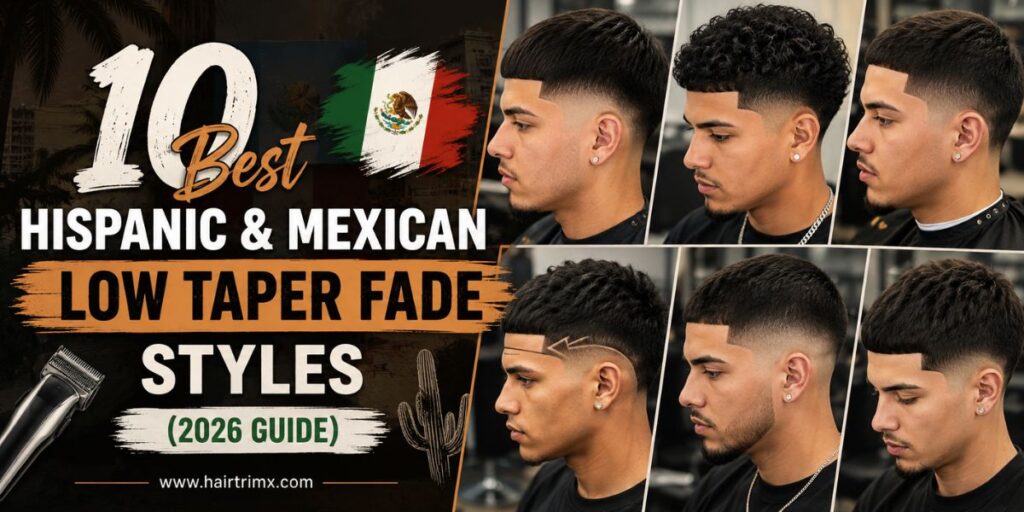
Choosing between a Hispanic and a Mexican low taper fade can feel confusing at first glance. Both haircuts share the same foundation, yet each carries its own texture, finish, and cultural flavor.
This guide breaks down everything you need to know before your next barber visit, from key features and face shape pairings to styling tips and pricing so you walk out with a cut that actually fits your look.
What Is a Low Taper Fade?
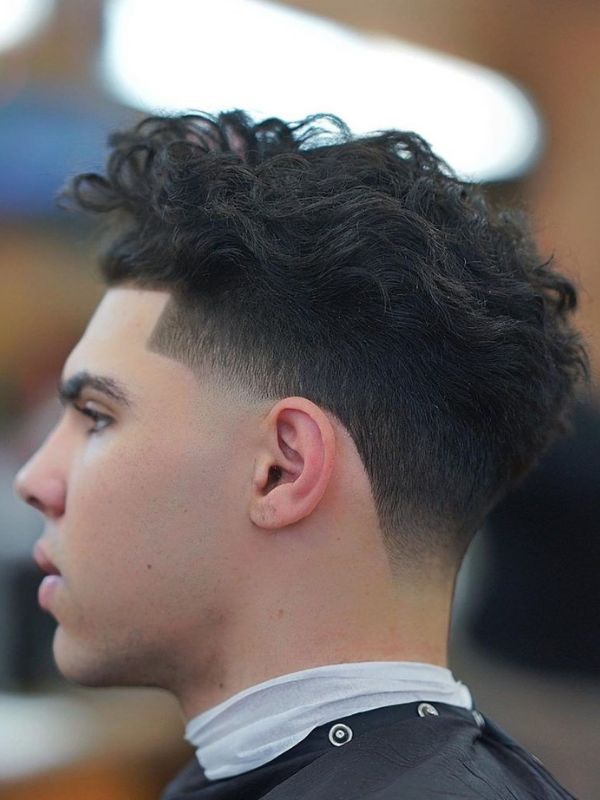
A low taper fade is a haircut where the hair gradually shortens near the ears and neckline instead of higher up on the scalp. The top stays longer while the sides blend smoothly into a shorter length, creating a soft transition rather than a hard contrast.
Low taper fades are popular because they:
- Work with almost any hair type, including straight, wavy, curly, and thick hair
- Offer a clean look that suits both casual and professional settings
- Grow out slowly, which means fewer trips to the barber
- Pair well with beards, line ups, and textured tops
- Suit every face shape with the right styling choices
Read This: 9 Best Low Taper Fade Long Hair Styles for Men (2026)
Hispanic Low Taper Fade
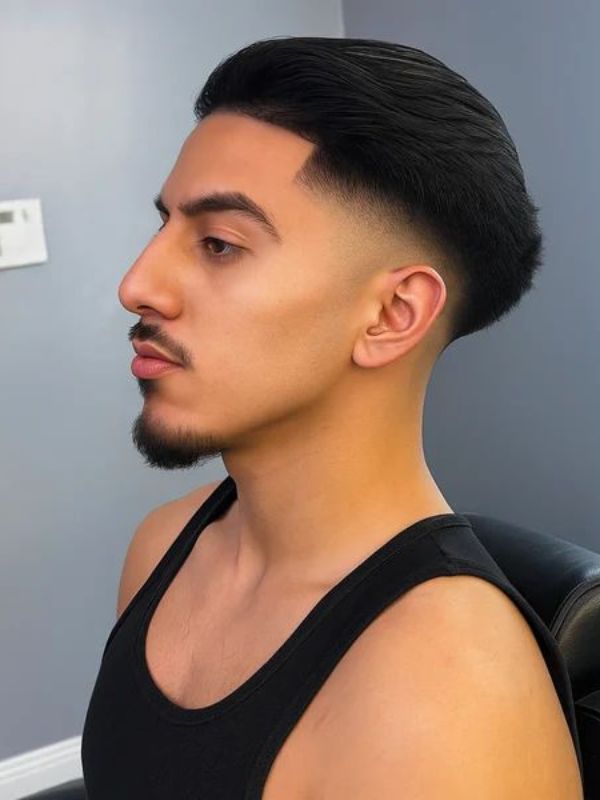
The Hispanic low taper fade draws inspiration from grooming traditions across many Spanish speaking countries, including Puerto Rico, Colombia, Cuba, and the Dominican Republic. It focuses on a natural, blended finish rather than sharp, defined lines.
Key Features
- Soft, seamless fade with no harsh contrast
- Natural hairline that still looks neat
- Balanced silhouette from every angle
- Works beautifully with curly or wavy hair textures
Best For
This style suits men who want a clean, low maintenance look for work, school, or everyday life. It is a safe, versatile option that never looks out of place.
Mexican Low Taper Fade
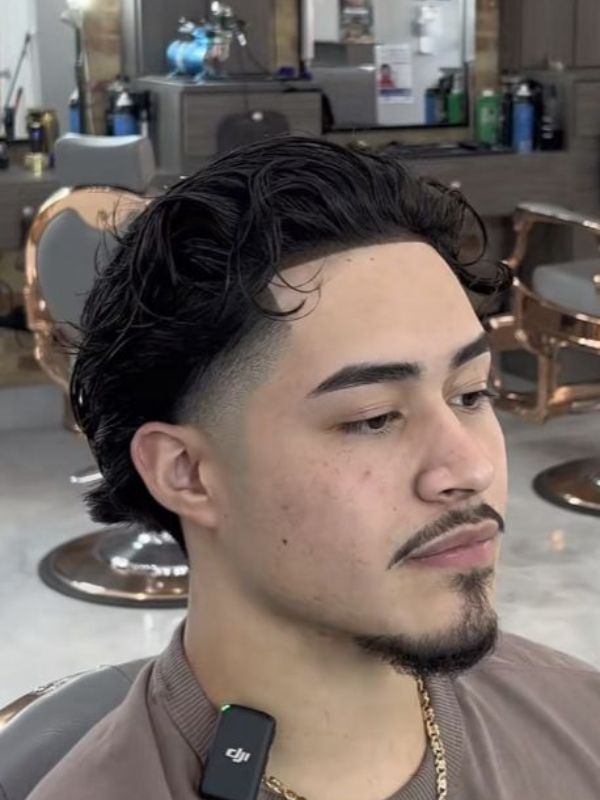
The Mexican low taper fade comes from Mexican barbería culture, known for precision and detail. It leans toward sharper lines and bolder finishing touches.
Key Features
- Crisp, defined line up around the forehead and neckline
- Hard parts or small artistic designs near the temple
- Sharper blend that still tapers low near the ears
- Often paired with slick backs, pompadours, or textured crops
Best For
This version fits men who want a bold, stylish edge. It works well for social occasions, creative industries, or anyone who prefers a sharper finish.
Hispanic vs Mexican Low Taper Fade
| Feature | Hispanic Low Taper Fade | Mexican Low Taper Fade |
| Fade style | Soft and blended | Sharp and defined |
| Hairline | Natural, tidy | Crisp line up |
| Overall vibe | Professional, subtle | Bold, stylish |
| Best hair types | Wavy, curly | Straight, thick |
| Maintenance | Low | Moderate |
Both styles share the same base technique, a fade that starts low near the ears. The real difference comes down to finishing details and the barbering tradition behind each one.
Hispanic and Mexican Low Taper Fade Straight Hair
Straight hair blends cleanly with either version since there is no natural texture to manage. A Hispanic style on straight hair usually looks smooth and understated, while a Mexican style adds a sharper line up to create contrast against the flat texture on top. Many barbers recommend a light matte product to prevent straight hair from looking too flat or shiny throughout the day.
Popular Hispanic & Mexican Low Taper Fade Styles
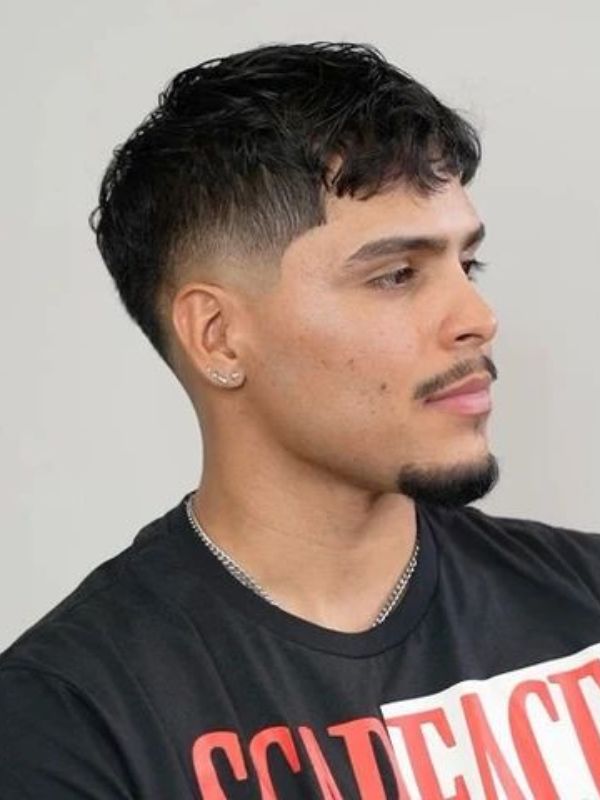
- Hispanic low taper fade with textured top
- Mexican low taper fade with line up
- Mexican low taper fade with beard blend
- Mexican low taper fade slick back
- Hispanic low taper fade with natural curls
- Mexican low taper fade with long hair on top
- Hispanic low taper fade pompadour
- Mexican mullet taper fade
- Hispanic low taper fade with soft part
- Mexican low taper fade with Edgar cut fringe
Each of these variations can be adjusted based on your hair thickness, curl pattern, and personal style preference.
Face Shape & Hair Type Guide
Face Shapes
- Round faces: A Mexican style line up adds sharp definition that balances soft curves
- Oval faces: Both styles work well since this shape is naturally balanced
- Square faces: A crisp line up highlights a strong jawline
- Long faces: A Hispanic soft fade avoids adding extra height on top
Hair Types
- Curly hair: Pairs well with either style since the fade controls the sides while curls stay full on top
- Wavy hair: Works best with a Hispanic soft blend for a natural finish
- Straight hair: Suits a Mexican line up for added contrast and sharpness
- Thick hair: Benefits from a Mexican fade since it removes bulk while keeping volume on top
How to Ask Your Barber
Walking into a barbershop with the right words makes a big difference. Bring a reference photo if you have one, and be specific about what you want.
Choose:
- Fade height: low, mid, or high
- Fade style: soft and blended, or sharp with a line up
- Top style: curls, slick back, textured crop, or Edgar fringe
- Beard blend: yes or no
- Design details: hard parts or simple patterns near the temple
Styling & Care Tips
- Wash hair with a sulfate free shampoo to protect natural curl or wave pattern
- Apply a light pomade or matte clay for hold without excess shine
- Use a wide tooth comb on curly hair to avoid frizz
- Trim the fade every two to three weeks to keep lines sharp
- Sleep on a satin pillowcase to protect curls and reduce frizz overnight
Cost & Touch Ups
| Service | Average Price | Frequency |
| Basic low taper fade | 15 to 30 dollars | Every 3 to 4 weeks |
| Fade with line up | 20 to 35 dollars | Every 2 to 3 weeks |
| Fade with design or beard blend | 25 to 45 dollars | Every 2 weeks |
Thick and fast growing hair usually needs more frequent touch ups to keep the fade looking crisp.
Read This: Low Taper Fade Buzz Cut 2026: Best Styles, Tips & Guide
Do & Don’t Tips
Do:
- Bring a clear reference photo to your appointment
- Ask for a lower fade if you prefer a subtle, professional look
- Mention your hair type so the barber can adjust technique
- Moisturize curly or wavy hair regularly
Don’t:
- Skip regular touch ups, since fades grow out quickly
- Choose a style that ignores your face shape
- Use heavy products that weigh down curls or waves
- Forget to ask about beard blending if you have facial hair
Final Summary
The Hispanic and Mexican low taper fade share the same foundation but express themselves differently. Hispanic styles lean soft, natural, and professional, while Mexican styles bring sharper lines and bolder finishing touches.
Your best choice depends on your hair type, face shape, and the vibe you want to bring to your everyday look. Whichever version you pick, a good barber and a bit of regular maintenance will keep the fade looking fresh for weeks at a time.
