

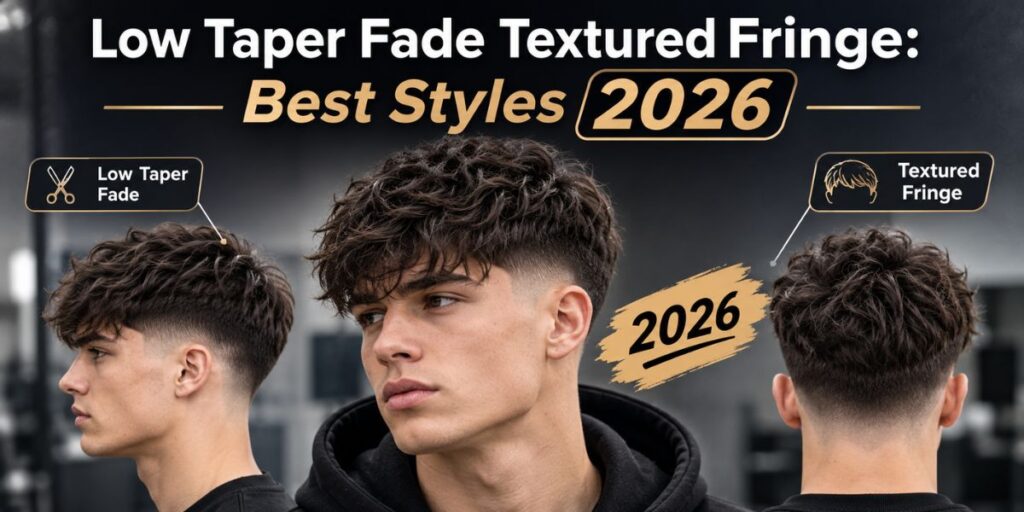
If you scroll through any barber’s Instagram right now, you will see the same cut popping up over and over. The low taper fade textured fringe has quietly become one of the most requested men’s haircuts of 2026, and it is easy to see why.
It blends a soft, barely there fade on the sides with a piece of choppy, movement filled hair up front. The result is a look that feels effortless but is actually pretty precise once you break down how it is cut.
In this guide, we will walk through what the low taper fade textured fringe actually is, why it is having such a moment, and thirteen different ways you can wear it depending on your hair type, texture, and personal style. We will also cover styling tips, upkeep, and answers to the questions people ask most.
Think of this as a full reference before your next barber appointment. By the end, you will know exactly which variation matches your face shape, how much upkeep to expect, and what to say so your barber nails the cut on the first try.
Why the Low Taper Fade Textured Fringe Is Trending
There are a few reasons this haircut keeps showing up on barbershop mood boards and TikTok tutorials.
- It works on almost every hair type, from straight to curly to coily.
- The low taper is subtle enough for office jobs but still looks intentional.
- The textured fringe adds a boyish, lived in energy that photographs well.
- It is low maintenance compared to a high skin fade, since the blend starts lower and grows out slower.
- Celebrities, athletes, and streamers have all been spotted wearing versions of it this year.
Barbers also love it because it is a canvas. Once the base taper is set, the top can be styled a dozen different ways, which is exactly what the sections below cover.
Search interest for this cut has climbed steadily over the past year, and it shows no sign of slowing down heading into the rest of 2026. Part of that comes from how photogenic it is, since the contrast between the tight sides and the loose, textured top translates well in both video and still photos. It also gives men a way to update a classic taper without committing to anything drastic, which makes it an easy recommendation for a first time client trying something new at the barbershop.
Messy Textured Fringe Low Taper Fade
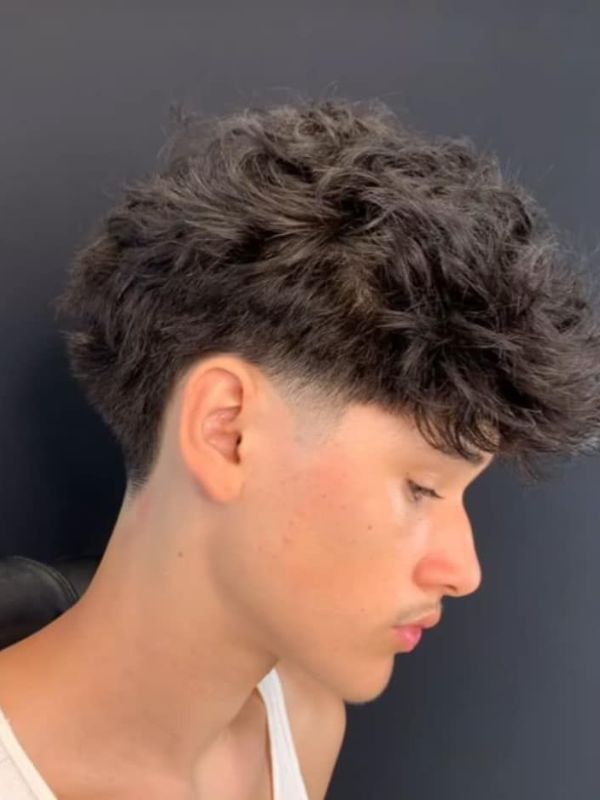
This is the version most people picture when they hear “textured fringe.” The top is cut with a razor or point cutting shears so individual pieces separate naturally.
A small amount of matte clay worked through damp hair gives it that just rolled out of bed finish. It suits round, oval, and square face shapes especially well.
Ask your barber to point cut the fringe rather than blunt cut it, since this is what creates the choppy, uneven pieces that give this style its signature look.
Curly Textured Fringe with Low Taper

Curly hair adds volume on its own, so the low taper keeps the sides from overwhelming the natural curl pattern on top. The fringe is left slightly longer to let the curls fall forward.
A curl defining cream applied to soaking wet hair, followed by air drying, keeps the pattern crisp without turning frizzy.
Since curls shrink up as they dry, most barbers cut this style a little longer than expected to account for the bounce back once the hair is fully dry.
Read This: Ice Cream Haircut: Before & After Transformation Guide (2026)
Blowout Textured Fringe Low Taper

The blowout version pushes for height and lift right at the hairline. A round brush and blow dryer are used to build volume before the texture is broken up with fingers.
This style pairs a barely faded side with a dramatic front section, making it a favorite for teens and younger men who want something bold.
It does require a few extra minutes of styling most mornings, so it suits guys who do not mind spending a little time with a blow dryer before heading out the door.
Wavy Fringe Low Taper Fade

Wavy hair naturally has movement, so this cut leans into that texture instead of fighting it. The fringe is cut at an angle so the waves can flow diagonally across the forehead.
Sea salt spray scrunched into towel dried hair enhances the wave pattern without weighing it down.
This variation tends to age well between haircuts, since the natural wave hides regrowth better than a straight or curly texture would.
Straight Hair Textured Fringe Taper
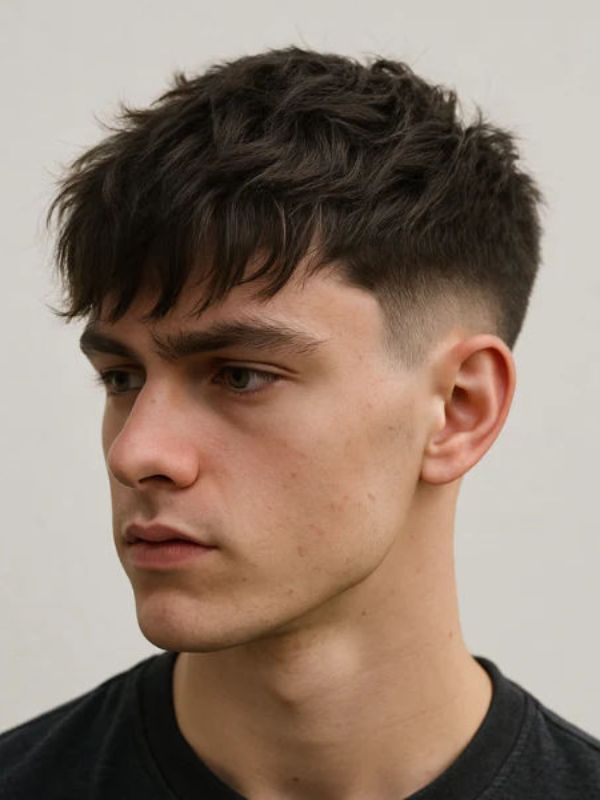
Straight hair holds a sharper, more graphic fringe line since there is no natural curl to soften the edges. Point cutting is used along the fringe to avoid a blunt, helmet like look.
A light pomade or texture powder adds grip so the straight strands separate instead of falling flat.
Low taper fade Textured Fringe curly
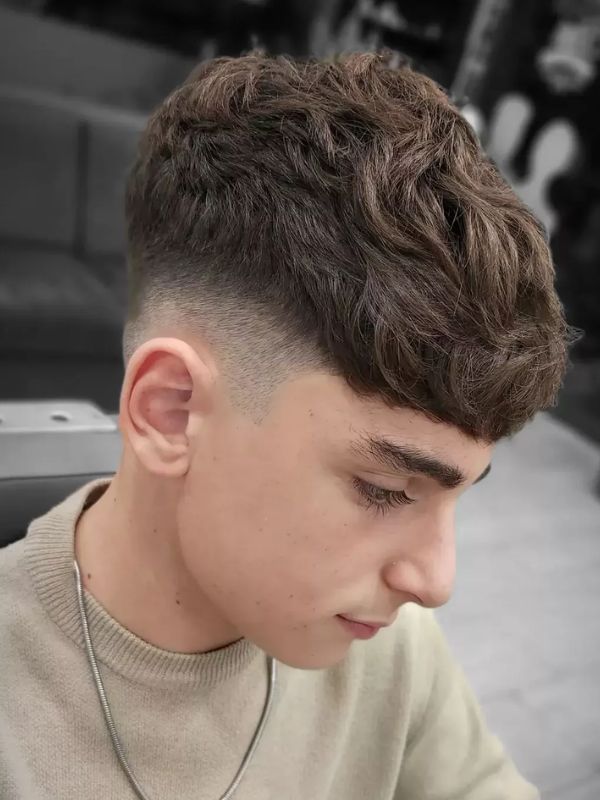
This is a shorter cousin of the curly fringe style above, where the curls are kept tighter to the head rather than long and flowing. It suits guys who want the curl texture without much daily styling.
A quick scrunch with a light gel on damp hair is usually all it needs.
Low Taper Fade Textured fringe mullet
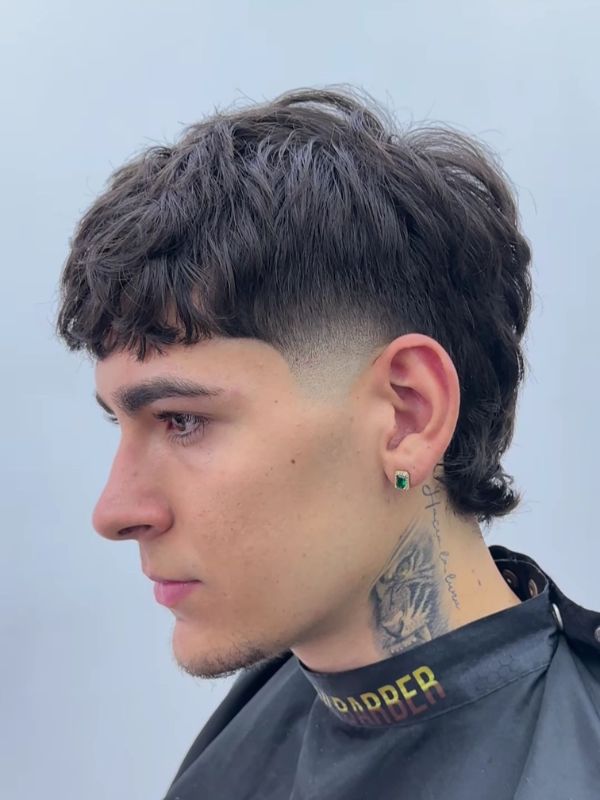
The mullet version keeps the sides and front short and textured while letting the back grow out longer. It is one of the boldest combinations on this list and works best with thicker hair that can hold shape at the nape.
Regular trims on the sides keep the low taper crisp while the back is left to grow.
Because it is a more statement making cut, it tends to work best for men who are comfortable standing out and do not mind a bit of extra attention.
French Crop Textured Fringe with Low Taper
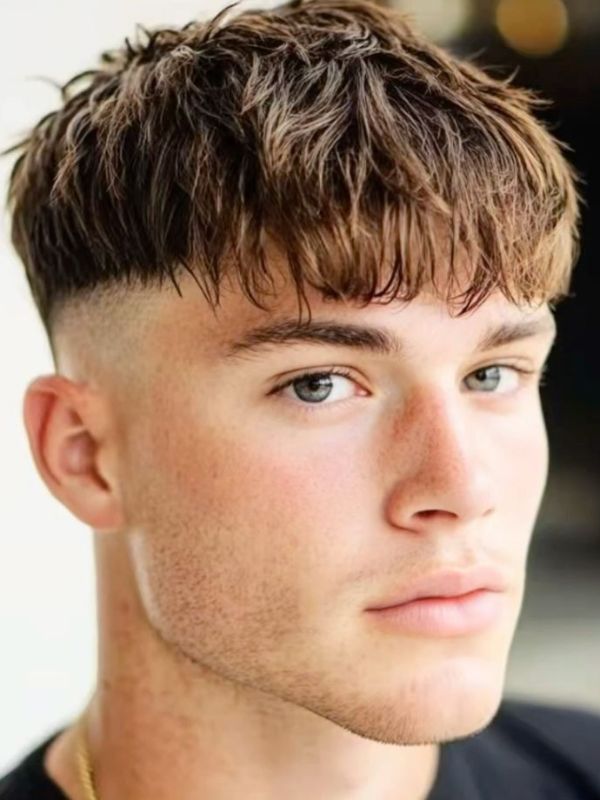
The French crop pairs a short, tight fringe with a low taper fade for a clean, almost military inspired shape. It is one of the more polished options here.
A small amount of matte paste and a comb through gives a neat, defined finish that still reads as textured rather than slicked.
Asian Textured Fringe Low Taper
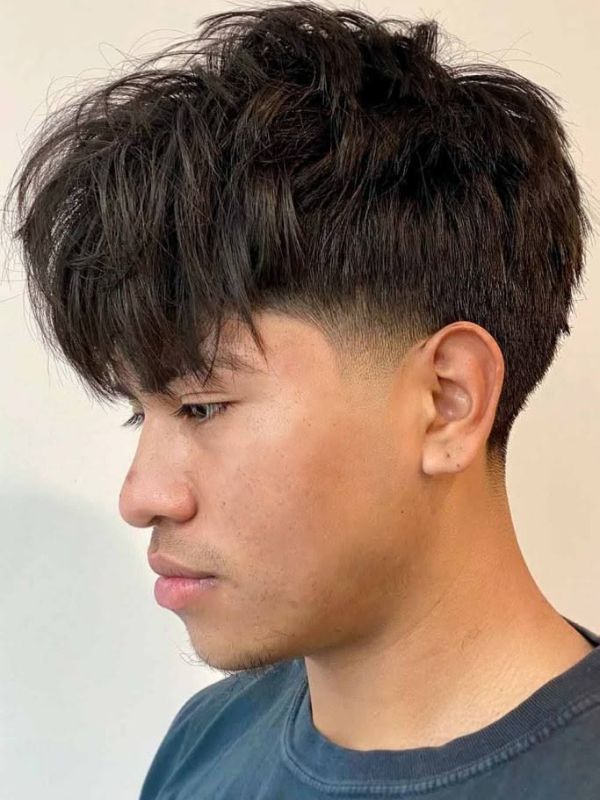
Asian hair tends to be thick and straight with strong natural volume, which this style is built around. The fringe is often cut heavier and blunter across the front, then point cut at the ends for softness.
A light hold cream keeps the shape without flattening the natural thickness.
Fluffy Fringe Low Taper Fade

The fluffy version is all about softness and volume. Hair is blow dried upward with a diffuser or round brush, then left unstyled on top for a soft, cloud like shape.
This works especially well on medium to thick hair and pairs nicely with a barely there taper on the sides.
Fine hair can achieve a similar effect with a lightweight volumizing mousse applied at the roots before drying.
Mid Length Textured Fringe with Low Taper
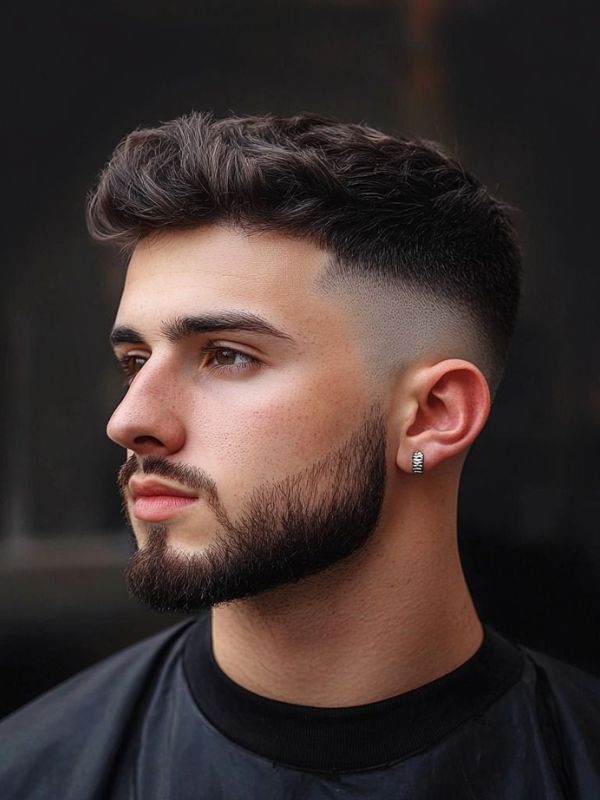
For guys who are not ready to go super short, the mid length version keeps more length on top while still tapering the sides low. The fringe sits closer to the eyebrows and moves freely.
A texturizing spray and some finger styling is usually enough for daily wear.
Low taper fade textured fringe straight hair

This variation focuses on keeping straight strands separated and full of texture rather than sleek. A texture spray applied before blow drying with fingers creates natural looking separation.
It is a great low effort option for guys who do not want to spend much time in front of the mirror.
Textured Fringe with Beard and Low Taper

Pairing this cut with a well groomed beard creates a balanced, masculine frame for the whole face. The low taper on the sides mirrors the beard fade at the cheek line for a cohesive look.
Regular beard trims and a beard oil keep the pairing looking sharp rather than patchy.
What is Low Taper Fade Textured Fringe
A low taper fade textured fringe is a men’s haircut that combines two specific techniques. The taper fade gradually shortens the hair from longer at the top to shorter near the hairline, starting low, usually just above the ears rather than higher up near the temples.
The textured fringe refers to the front section of hair, which is cut with texturizing shears or a razor so individual strands separate instead of lying flat as one solid piece.
Here is a quick comparison to help you understand how it differs from similar cuts.
| Haircut | Fade Starting Point | Top Texture | Maintenance Level |
| Low Taper Fade Textured Fringe | Low, near the ears | Choppy, separated fringe | Low to moderate |
| High Skin Fade | High, near the crown | Varies, often slicked | High |
| Mid Taper Fade | Middle of the head | Varies | Moderate |
| Classic Crew Cut | Not faded, blended evenly | Short, uniform | Low |
Because the fade starts lower, grow out is much less noticeable, which is part of why this cut has become such a popular low maintenance choice this year.
Read This: Haircut Designs: 28 Trendy & Stylish Ideas 2026
Face shape also plays a role in which version will look best on you. Here is a simple breakdown to guide your next conversation with your barber.
| Face Shape | Recommended Fringe Style | Why It Works |
| Round | Messy or Blowout Textured Fringe | Adds height and breaks up roundness |
| Square | French Crop or Straight Hair Fringe | Softens strong jaw angles |
| Oval | Almost any variation | Balanced proportions suit most cuts |
| Heart | Fluffy or Mid Length Fringe | Adds width lower on the face |
| Diamond | Curly or Wavy Fringe | Softens narrow forehead and chin |
The Evolution of Low Taper Fade Textured Fringe
Fade haircuts have been a staple of men’s grooming for decades, tracing back to military and barbershop culture where short, tidy sides were the norm. Over time, barbers began experimenting with where the fade started, giving rise to high, mid, and low variations.
The textured fringe itself grew out of the Korean and Japanese men’s fashion scene, where soft, layered bangs became a signature look before spreading globally through social media and K pop influence.
By combining the two, barbers created a hybrid that offers the neatness of a fade with the youthful, expressive energy of a textured fringe. In 2026, this pairing has become one of the defining looks of the year, showing up across every hair type and age group, from teenagers to men in their thirties looking for a fresher take on a classic cut.
Social media accelerated this evolution significantly. Short form video made it easy for barbers to show step by step transformations, and the low taper fade textured fringe became a favorite because it demonstrates so well on camera. What started as a niche request in a handful of barbershops has now become a mainstream ask, with reference photos of this cut circulating across Pinterest, Instagram, and TikTok on a daily basis. Expect the trend to keep evolving with small variations in fringe length and texture as the year continues.
Conclusion
The low taper fade textured fringe earns its popularity honestly. It is versatile enough to suit straight, wavy, curly, and coily hair, low maintenance enough for busy schedules, and stylish enough to carry you from a casual weekend to a job interview.
Whether you lean toward a messy fringe, a fluffy blowout, or a sharp French crop pairing, there is a version of this cut built for your face shape and lifestyle. Bring a few reference photos from this guide to your next barber appointment and describe exactly how low you want the taper and how much texture you want up front.
A good barber will be able to adjust the technique to your natural hair type, so do not be afraid to ask questions before the clippers come out.
Above all, treat this cut as a starting point rather than a fixed formula. Once you find the version that fits your hair and lifestyle, small tweaks in length and texture will keep it feeling fresh for years to come.
FAQs
Is a low taper fade good for thick hair?
Yes, thick hair holds the fringe texture especially well and gives the top more volume to work with.
How often should I get a low taper fade trimmed?
Every four to six weeks keeps the taper crisp, though the low starting point means it grows out gracefully.
Can I get a textured fringe with curly hair?
Absolutely, curly hair actually enhances the texture and movement that this style is built around.
What products work best for styling a textured fringe?
Matte clay, texturizing powder, or a light sea salt spray all help create natural, separated texture.
Does a low taper fade suit older men?
Yes, since it is subtle and professional looking, it works well for men of any age who want a low key update.
Is the low taper fade textured fringe hard to maintain at home?
Not really, most versions only need a quick styling product and some finger work in the morning.
